
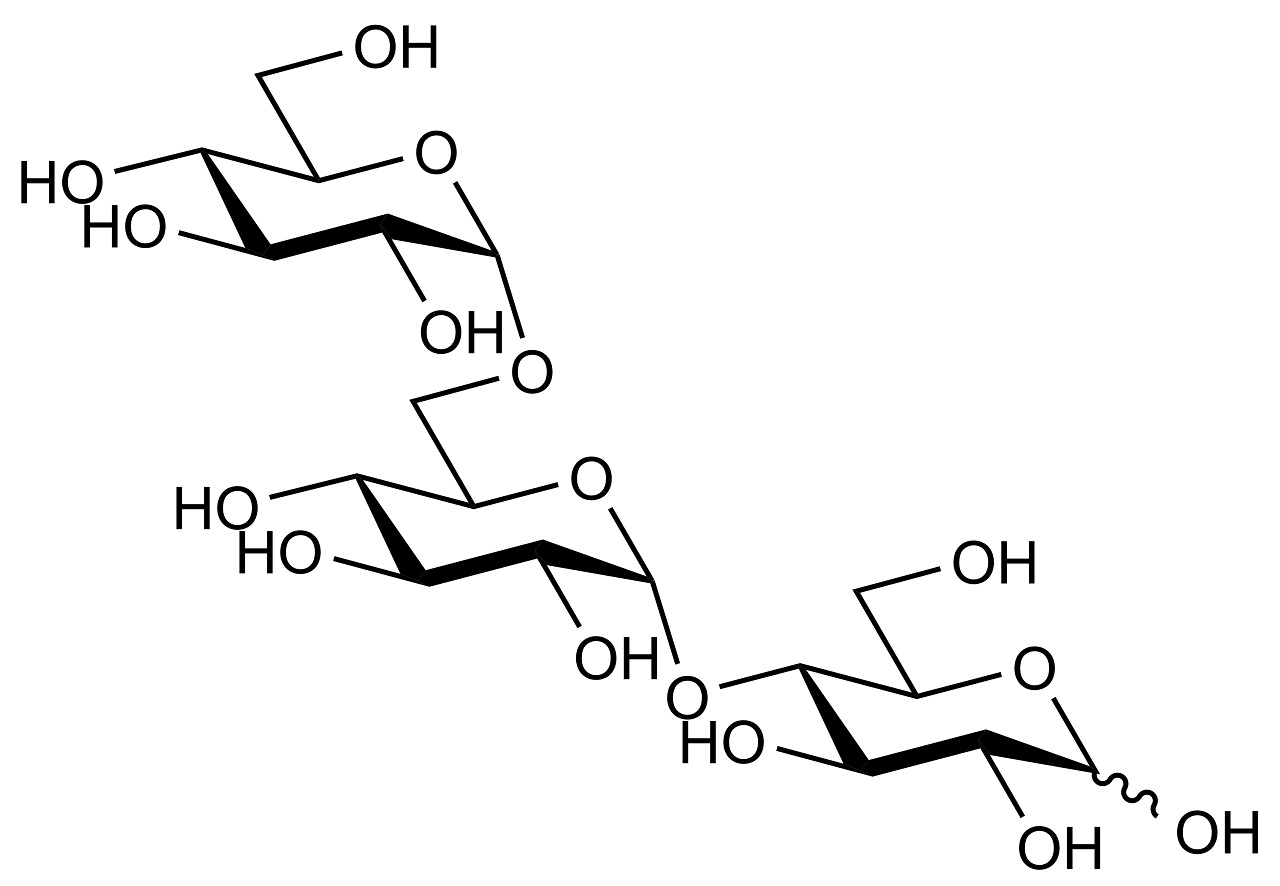
Panose
250 mg
This product has been discontinued
These, O-PAN-1G and O-PAN-250MG (read more), pack sizes have been discontinued.
High purity Panose for use in research, biochemical enzyme assays and analytical testing applications. Panose is formed by the action of neopullulanase on pullulan. It can be used as an analytical standard or as a substrate to help characterise the activities of other starch degrading enzymes including α-glucosidase and amyloglucosidase.
Data booklets for each pack size are located in the Documents tab.
Related Products
Similar Products
Colourimetric Substrates
Associated Enzymes
Glycerol Free
Publications

Diastatic power and maltose value: a method for the measurement of amylolytic enzymes in malt.
Charmier, L. M., McLoughlin, C. & McCleary, B. V. (2021). Journal of the Institute of Brewing, In Press.
Diastatic power and maltose value: a method for the measurement of amylolytic enzymes in malt.
Charmier, L. M., McLoughlin, C. & McCleary, B. V. (2021). Journal of the Institute of Brewing, In Press.
A simple method for measurement of the amylolytic activity of malt has been developed and fully evaluated. The method, termed the Maltose Value (MV) is an extension of previously reported work. Here, the MV method has been studied in detail and all aspects of the assay (sample grinding and extraction, starch hydrolysis, maltose hydrolysis and determination as glucose) have been optimised. The method is highly correlated with other dextrinising power methods. The MV method involves extraction of malt in 0.5% sodium chloride at 30°C for 20 minutes followed by filtration; incubation of an aliquot of the undiluted filtrate with starch solution (pH 4.6) at 30°C for 15 min; termination of reaction with sodium hydroxide solution; dilution of sample in an appropriate buffer; hydrolysis of maltose with a specific α-glucosidase; glucose determination and activity calculation. Unlike all subsequent reducing sugar methods, the maltose value method measures a defined reaction product, maltose, with no requirement to use equations to relate analytical values back to Lintner units. The maltose value method is the first viable method in 130 years that could effectively replace the 1886 Lintner method.

Alpha-glucans from bacterial necromass indicate an intra-population loop within the marine carbon cycle.
Beidler, I., Steinke, N., Schulze, T., Sidhu, C., Bartosik, D., Zühlke, M. K., et al. (2024). Nature Communications, 15(1), 4048.
Alpha-glucans from bacterial necromass indicate an intra-population loop within the marine carbon cycle.
Beidler, I., Steinke, N., Schulze, T., Sidhu, C., Bartosik, D., Zühlke, M. K., et al. (2024). Nature Communications, 15(1), 4048.
Phytoplankton blooms provoke bacterioplankton blooms, from which bacterial biomass (necromass) is released via increased zooplankton grazing and viral lysis. While bacterial consumption of algal biomass during blooms is well-studied, little is known about the concurrent recycling of these substantial amounts of bacterial necromass. We demonstrate that bacterial biomass, such as bacterial alpha-glucan storage polysaccharides, generated from the consumption of algal organic matter, is reused and thus itself a major bacterial carbon source in vitro and during a diatom-dominated bloom. We highlight conserved enzymes and binding proteins of dominant bloom-responder clades that are presumably involved in the recycling of bacterial alpha-glucan by members of the bacterial community. We furthermore demonstrate that the corresponding protein machineries can be specifically induced by extracted alpha-glucan-rich bacterial polysaccharide extracts. This recycling of bacterial necromass likely constitutes a large-scale intra-population energy conservation mechanism that keeps substantial amounts of carbon in a dedicated part of the microbial loop.
Rapid method for quantitation of seven human milk oligosaccharides in infant formula and premix.
Molnár-Gábor, D., Lengyel, M. & Krongaard, T. (2024). Carbohydrate Research, 541, 109149.
Rapid method for quantitation of seven human milk oligosaccharides in infant formula and premix.
Molnár-Gábor, D., Lengyel, M. & Krongaard, T. (2024). Carbohydrate Research, 541, 109149.
As the evidence supporting the beneficial effects of human milk oligosaccharides (HMOs) grows, so does the commercial interest in their inclusion in infant formula products. This also requires analytical methods capable of their quantification from finished infant formula products as well as from premixed ingredients in some cases. The objective of the present study was the development and single-laboratory validation of a method that can be used for this purpose for seven HMOs: 2′-fucosyllactose (2′FL), 3-fucosyllactose (3FL), difucosyllactose (DFL), 3′-sialyllactose (3′SL), 6′-sialyllactose (6′SL), lacto-N-tetraose (LNT), and lacto-N-neotetraose (LNnT). The present method uses labeling by reductive amination, with 4-aminobenzoic acid ethyl ester (benzocaine) as the labeling reagent and picoline borane as the reducing agent, then applies HPLC separation with UV detection. The seven HMOs could be analyzed from infant formula and premix samples with recoveries between 91 and 108%, relative standard deviations of 4.3% or lower across all replicates, and limits of quantitation between 0.001% and 0.004% of powder sample by weight. The method was found to be rapid and reliable, with a runtime of only 14 min per injection, in contrast to other methods found in literature which typically use nearly or more than an hour. In addition, it uses instrumentation that's readily available in most analytical laboratories.
In vitro digestibility of commercial and experimental isomalto-oligosaccharides.
Hu, Y., Winter, V. & Gänzle, M. (2020). Food Research International, 134, 109250.
In vitro digestibility of commercial and experimental isomalto-oligosaccharides.
Hu, Y., Winter, V. & Gänzle, M. (2020). Food Research International, 134, 109250.
Isomalto-oligosaccharides (IMO) significantly contribute to the global oligosaccharide market. IMO are linear α-(1 → 6) linked oligosaccharides with isomaltotriose as the representative trisaccharide. Commercial IMO preparations ypically also contain panose-series oligosaccharides as a major component. In humans, IMO are partially digestible but the digestibility of specific components of commerical IMO preparations remains unknown. This study aimed to compare the in vitro digestibility of reference compounds, experimental α-gluco-oligosaccharides and commercial IMO. Experimental α-gluco-oligosaccharides were synthesized with the recombinant dextransucrase DsrM. Two in vitro digestion methods were used, a reference method matching the AOAC method for dietary fibre, and a protocol that uses brush border glycosyl hydrolases from the rat intestine. The α-gluco-oligosaccharides patterns after hydrolysis remain were analyzed by high performance anion exchange chromatography coupled to pulsed amperometric detection. Panose-series oligosaccharides were hydrolysed more rapidly by amylase and amyloglucosidase when compared to hydrolysis by rat intestinal enzymes. The rate of hydrolysis by rat intestinal enzymes decreased in the order panose > isomaltose, kojibiose or nigerose. Hydrolysis of panose-series oligosaccharides but not the hydrolysis of isomalto-oligosaccharides was dependent on the degree of polymerization. Qualitative analysis of oligosaccharides remaining after hydrolysis indicated that rat small intestinal enzymes hydrolyse their substrates from the non-reducing end. Taken together, results inform on the modification or optimization of current production processes for IMO to obtain tailored oligosaccharide preparations with reduced digestibility and an increased content of dietary fibre.
Sequence analysis and biochemical properties of an acidophilic and hyperthermophilic amylopullulanase from Thermofilum pendens.
Li, X., Zhao, J., Fu, J., Pan, Y., & Li, D. (2018). International Journal of Biological Macromolecules, 114, 235-243.
Sequence analysis and biochemical properties of an acidophilic and hyperthermophilic amylopullulanase from Thermofilum pendens.
Li, X., Zhao, J., Fu, J., Pan, Y., & Li, D. (2018). International Journal of Biological Macromolecules, 114, 235-243.
The acidophilic and thermophilic pullulanases have many potential applications in the processes of starch liquefaction and saccharification. In this study, a gene encoding an amylopullulanase from Thermofilum pendens (TPApu) was heterologously expressed in Escherichia coli. Although TPApu possessed the same continuous GH57N_Apu domain and the succeeding α-helical region as other two amylopullulanases from Staphylothermus marinus (SMApu) and Caldivirga maquilingensis (CMApu), it only showed maximal amino acid identities of 25.7-28.7% with CMApu and SMApu. The purified TPApu appeared as a single band of SDS-PAGE with a molecular mass of 65.5 kDa and exhibited the maximal activity at pH 3.5 and 95-100°C. TPApu had the highest catalytic efficiency towards pullulan (kcat/km, 8.79 s-1 mL mg-1) and α-cyclodextrin (kcat/km, 0.36 s-1 mM-1). In the initial stages, the ring-opening reactions of γ-cyclodextrin, 6-O-glucosyl-β-cyclodextrin, 6-O-maltosyl-β-cyclodextrin and the debranching reactions of 6-O-maltooctaosyl-β-cyclodextrin were firstly catalyzed. In the subsequent reactions, a serial of maltooligosaccharides were produced. As the most acidophilic amylopullulanase among thermophilic pullulanases reported to date, TPApu preferred to debranch the DP6-12 side chains of amylopectin at pH 4.5 and 100°C.
Safety Information
Download Safety Data Sheet
Select a specific region and the Safety Data Sheet will open in a new window. Please make sure your browser doesn’t block pop-up windows

Receive Megazyme’s latest articles, news, product introductions and promotions
Customers also viewed
Panose
O-PAN-1G1 g
Panose
O-PAN-250MG250 mg
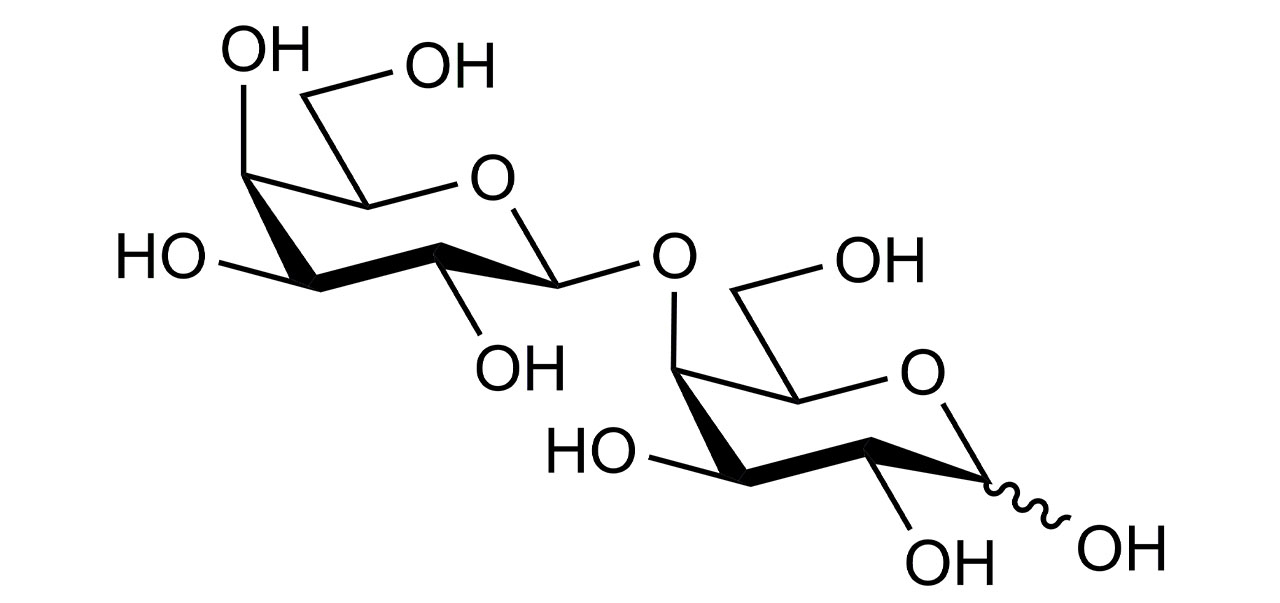
1,4-β-D-Galactobiose
O-GBI4-20MG20 mg
1,4-β-D-Galactobiose
O-GBI4-50MG50 mg
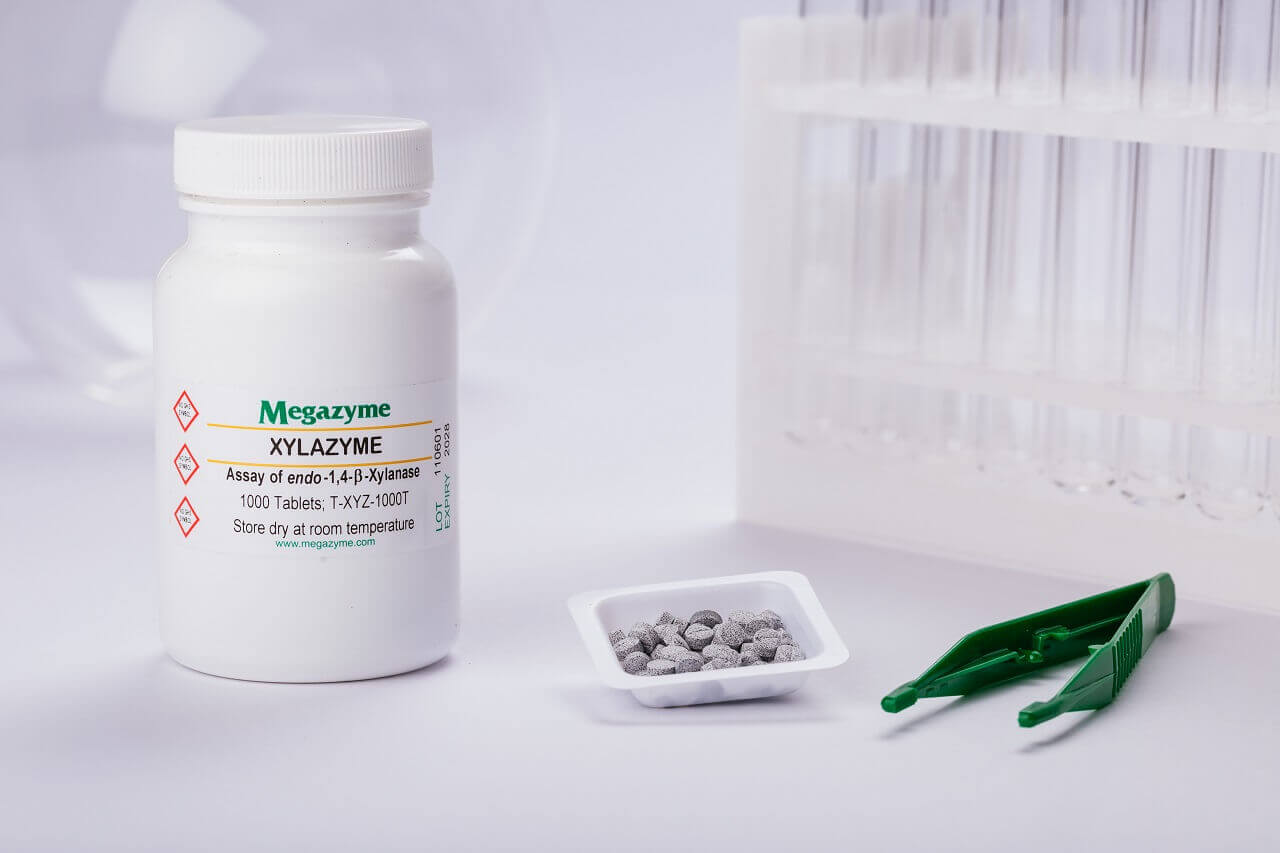
Xylazyme Tablets
T-XYZ-200T200 Tablets
Xylazyme Tablets
700005111 / T-XYZ-1000T1,000 Tablets
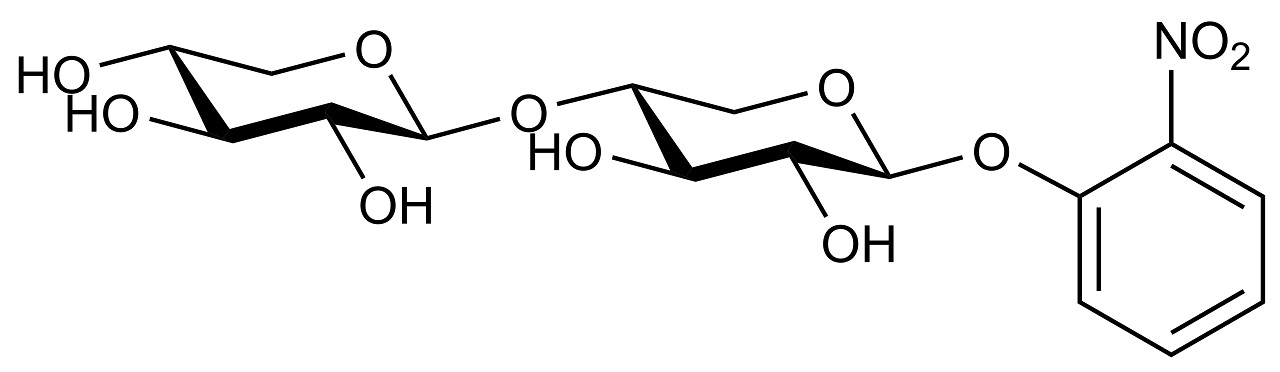
2-Nitrophenyl-β-xylobioside
O-ONPX2-5MG5 mg
2-Nitrophenyl-β-xylobioside
O-ONPX2-25MG25 mg
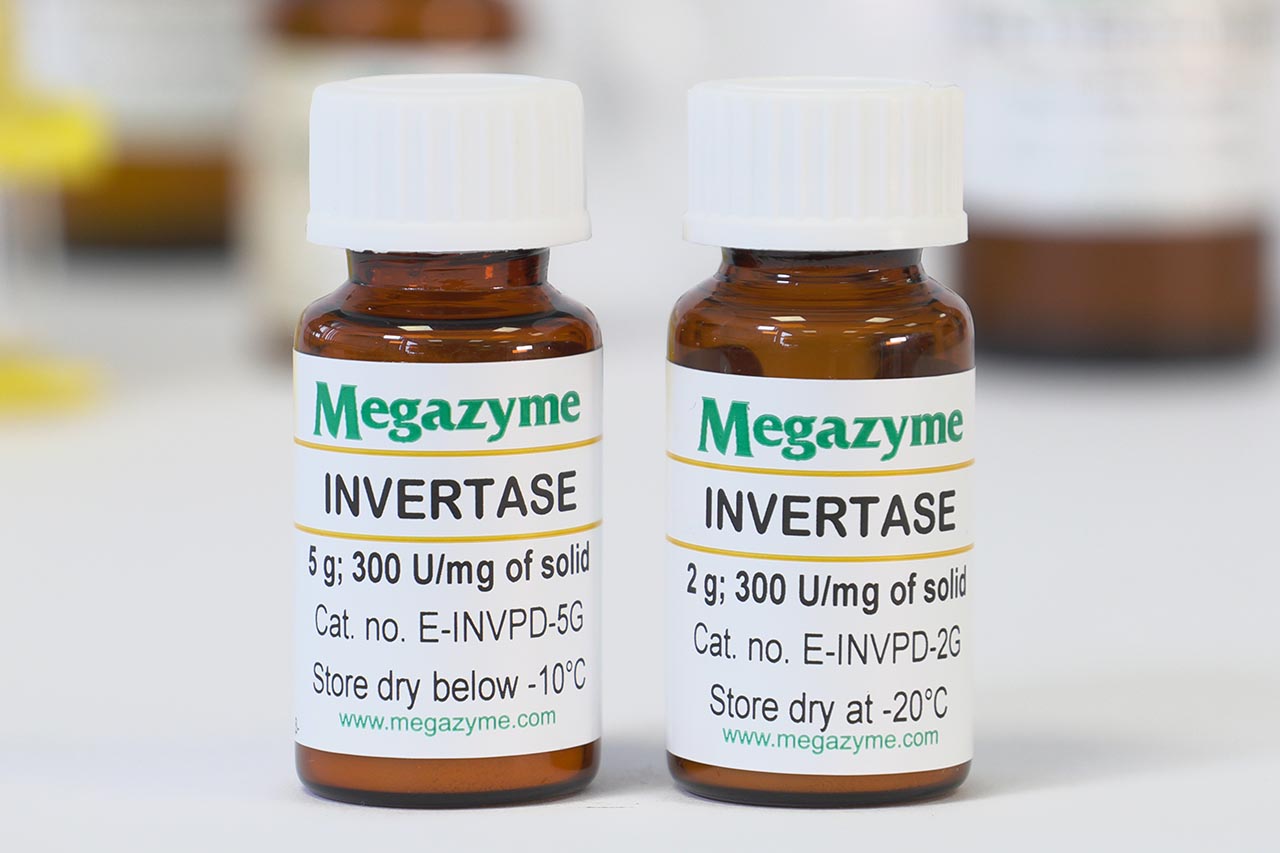
Invertase
E-INVPD-2G2 g
Invertase
E-INVPD-5G5 g


