
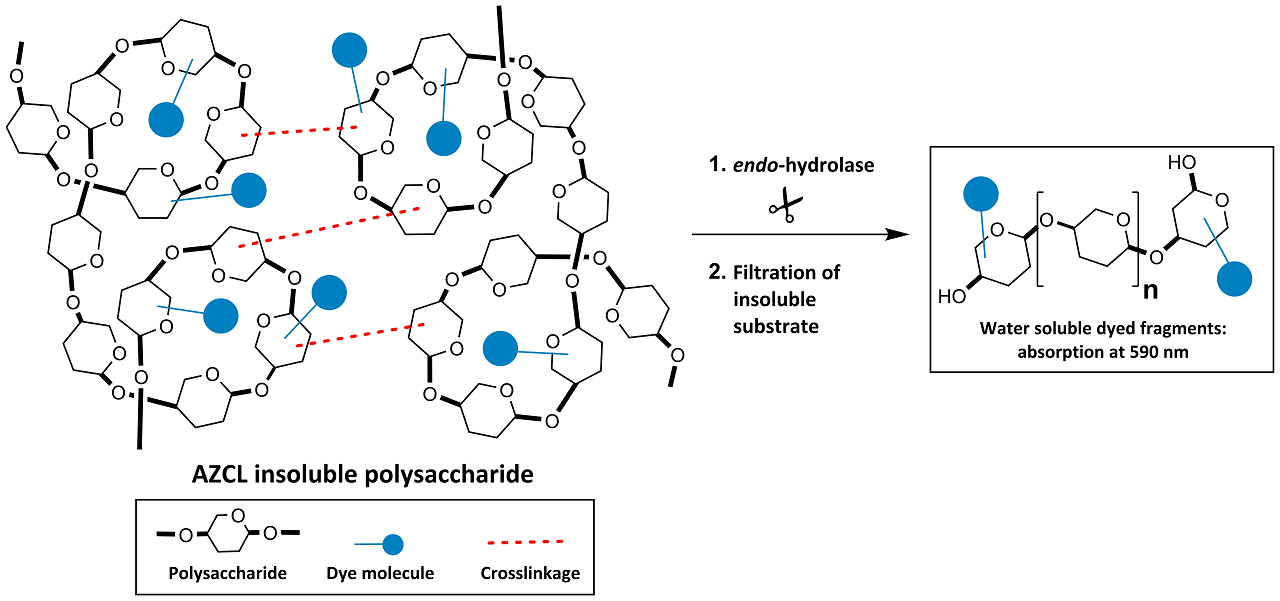
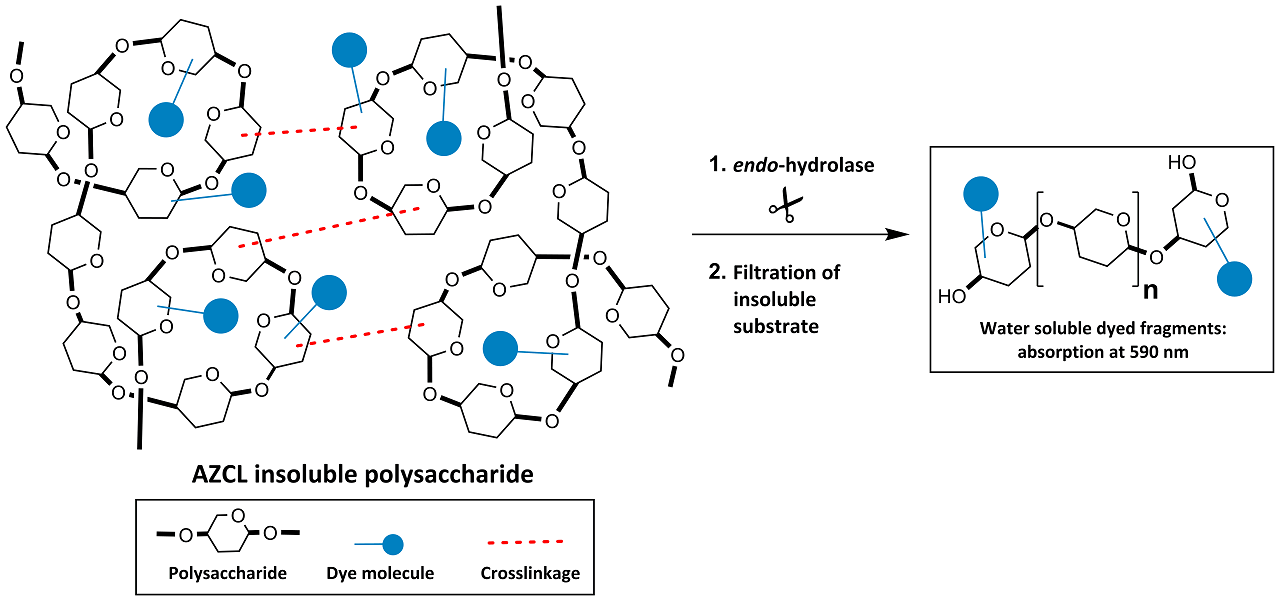
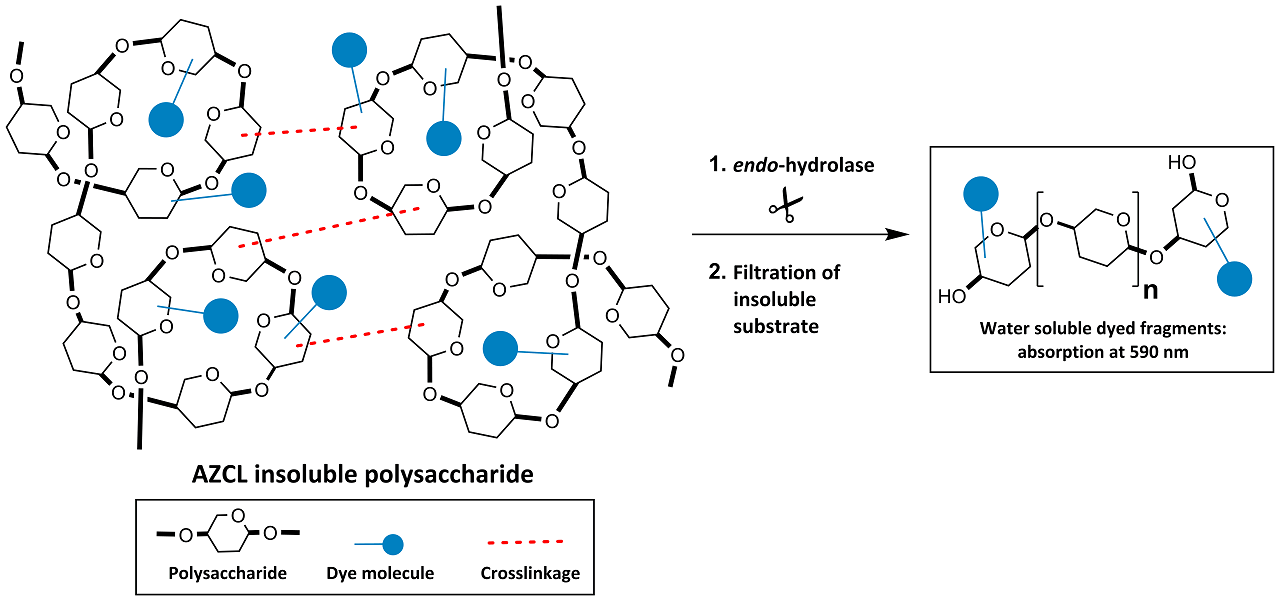
AZCL-Arabinoxylan (Wheat) (fine)
3 g
This product has been discontinued
This product has been discontinued (read more).
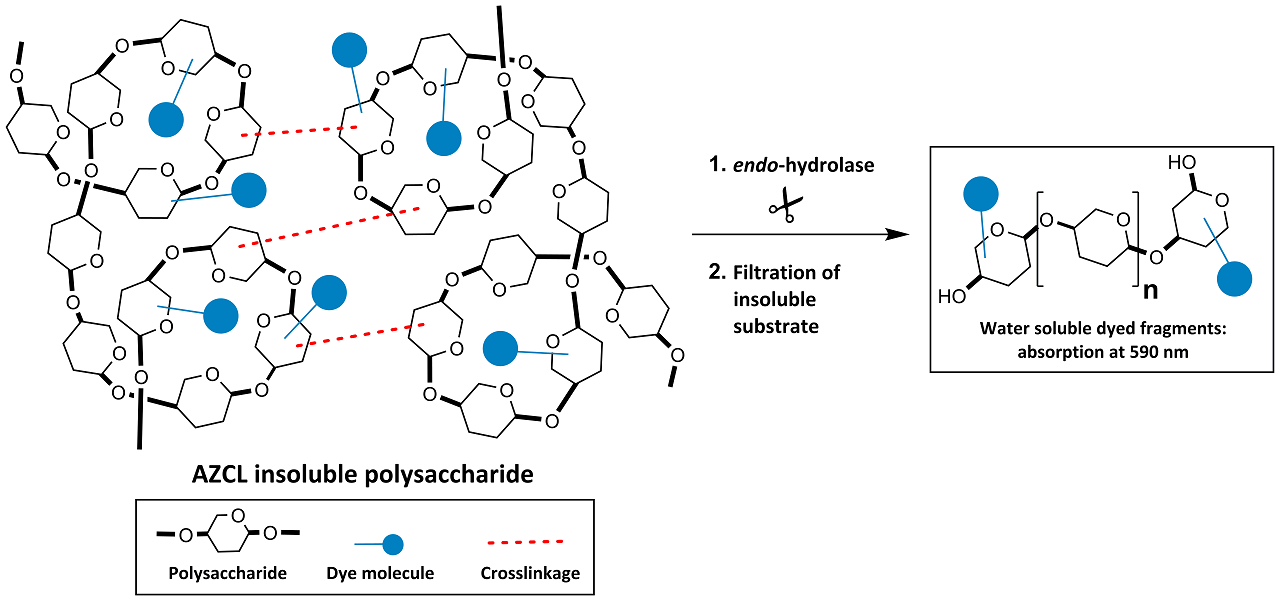
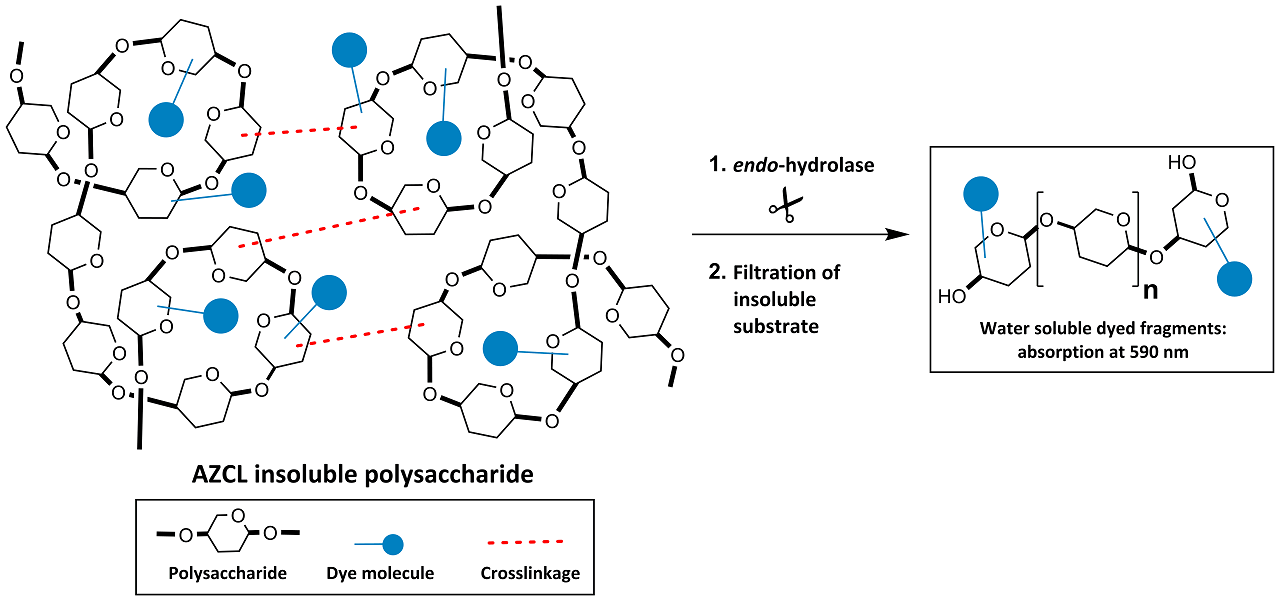
High purity dyed, crosslinked and finely milled insoluble AZCL-Arabinoxylan (Wheat) for identification of enzyme activities in research, microbiological enzyme assays and in vitro diagnostic analysis.
Substrate for the assay of endo-1,4-β-D-xylanase.
Discover more available insoluble chromogenic substrates.
Related Products
Similar Products
Related Carbohydrates
Associated Enzymes
Publications

Measurement of polysaccharide degrading enzymes using chromogenic and colorimetric substrates.
McCleary, B. V. (1991). Chemistry in Australia, September, 398-401.
Measurement of polysaccharide degrading enzymes using chromogenic and colorimetric substrates.
McCleary, B. V. (1991). Chemistry in Australia, September, 398-401.
Enzymic degradation of carbohydrates is of major significance in the industrial processing of cereals and fruits. In the production of beer, barley is germinated under well defined conditions (malting) to induce maximum enzyme synthesis with minimum respiration of reserve carbohydrates. The grains are dried and then extracted with water under controlled conditions. The amylolytic enzymes synthesized during malting, as well as those present in the original barley, convert the starch reserves to fermentable sugars. Other enzymes act on the cell wall polysaccharides, mixed-linkage β-glucan and arabinoxylan, reducing the viscosity and thus aiding filtration, and reducing the possibility of subsequent precipitation of polymeric material. In baking, β-amylase and α-amylase give controlled degradation of starch to fermentable sugars so as to sustain yeast growth and gas production. Excess quantities of α-amylase in the flour result in excessive degradation of starch during baking which in turn gives a sticky crumb texture and subsequent problems with bread slicing. Juice yield from fruit pulp is significantly improved if cell-wall degrading enzymes are used to destroy the three-dimensional structure and water binding capacity of the pectic polysaccharide components of the cell walls. Problems of routine and reliable assay of carbohydrate degrading enzymes in the presence of high levels of sugar compounds are experienced with such industrial process.
Safety Information
Download Safety Data Sheet
Select a specific region and the Safety Data Sheet will open in a new window. Please make sure your browser doesn’t block pop-up windows

Receive Megazyme’s latest articles, news, product introductions and promotions
Customers also viewed
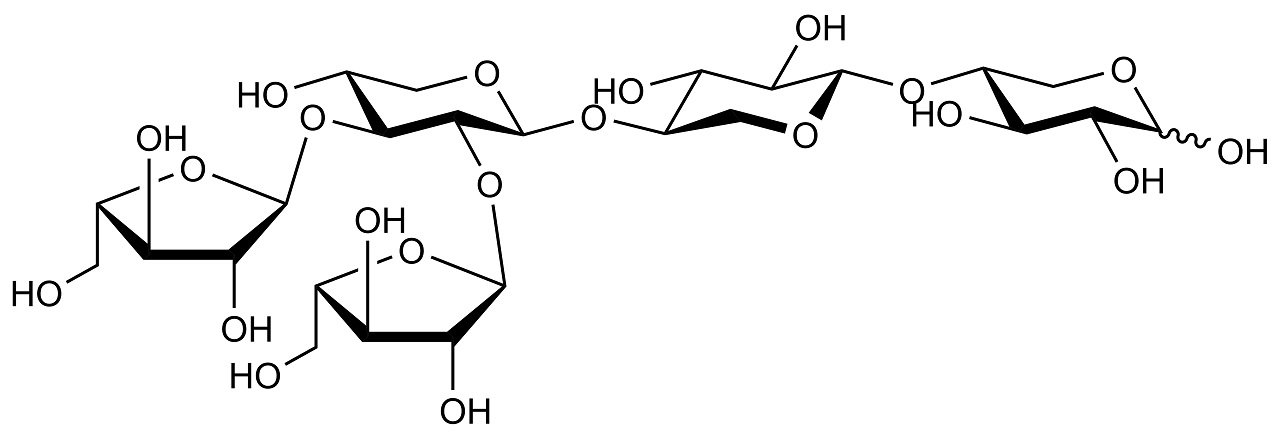
23,33-di-α-L-Arabinofuranosyl-xylotriose (A2,3XX)
O-A23XX-30MG30 mg
23,33-di-α-L-Arabinofuranosyl-xylotriose (A2+3XX)
O-A23XX-50MG50 mg
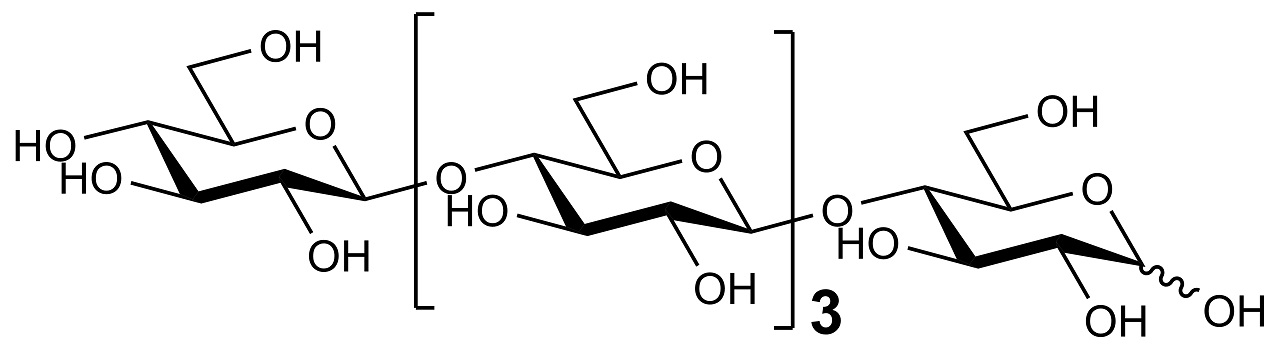
Cellopentaose
700004947 / O-CPE-20MG20 mg
Cellopentaose
Discontinued / O-CPE-50MG50 mg


