
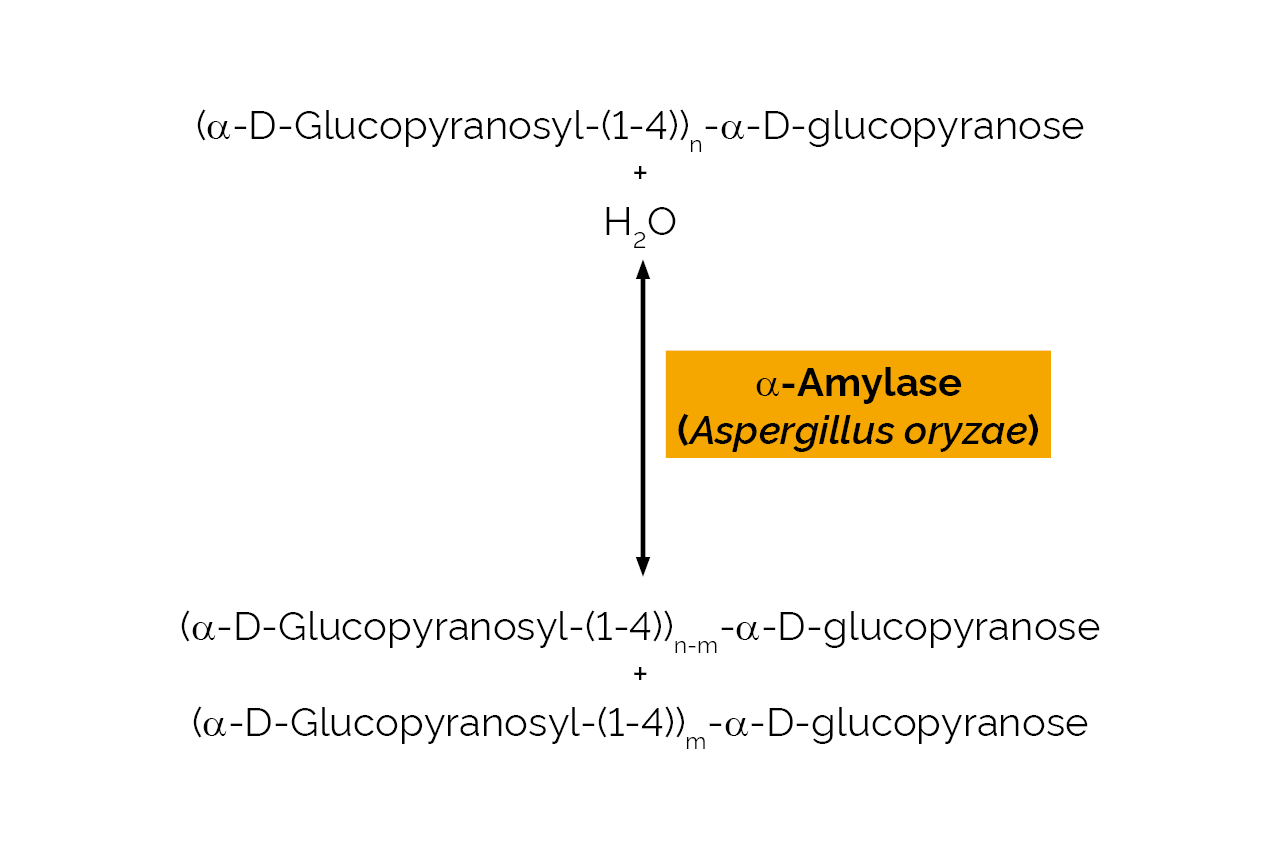
α-Amylase (Aspergillus oryzae)
20,000 Units
High purity α-Amylase (Aspergillus oryzae) for use in research, biochemical enzyme assays and analytical testing applications.
View our full range of Carbohydrate Active enZYme products.
Related Products
Similar Products
Related Carbohydrates
Colourimetric Substrates
Publications

Measurement of α-amylase activity in white wheat flour, milled malt, and microbial enzyme preparations, using the ceralpha assay: Collaborative study.
McCleary, B. V., McNally, M., Monaghan, D. & Mugford, D. C. (2002). Journal of AOAC International, 85(5), 1096-1102.
Measurement of α-amylase activity in white wheat flour, milled malt, and microbial enzyme preparations, using the ceralpha assay: Collaborative study.
McCleary, B. V., McNally, M., Monaghan, D. & Mugford, D. C. (2002). Journal of AOAC International, 85(5), 1096-1102.
This study was conducted to evaluate the method performance of a rapid procedure for the measurement of α-amylase activity in flours and microbial enzyme preparations. Samples were milled (if necessary) to pass a 0.5 mm sieve and then extracted with a buffer/salt solution, and the extracts were clarified and diluted. Aliquots of diluted extract (containing α-amylase) were incubated with substrate mixture under defined conditions of pH, temperature, and time. The substrate used was nonreducing end-blocked p-nitrophenyl maltoheptaoside (BPNPG7) in the presence of excess quantities of thermostable α-glucosidase. The blocking group in BPNPG7 prevents hydrolysis of this substrate by exo-acting enzymes such as amyloglucosidase, α-glucosidase, and β-amylase. When the substrate is cleaved by endo-acting α-amylase, the nitrophenyl oligosaccharide is immediately and completely hydrolyzed to p-nitrophenol and free glucose by the excess quantities of α-glucosidase present in the substrate mixture. The reaction is terminated, and the phenolate color developed by the addition of an alkaline solution is measured at 400 nm. Amylase activity is expressed in terms of Ceralpha units; 1 unit is defined as the amount of enzyme required to release 1 µmol p-nitrophenyl (in the presence of excess quantities of α-glucosidase) in 1 min at 40°C. In the present study, 15 laboratories analyzed 16 samples as blind duplicates. The analyzed samples were white wheat flour, white wheat flour to which fungal α-amylase had been added, milled malt, and fungal and bacterial enzyme preparations. Repeatability relative standard deviations ranged from 1.4 to 14.4%, and reproducibility relative standard deviations ranged from 5.0 to 16.7%.
New developments in the measurement of α-amylase, endo-protease, β-glucanase and β-xylanase.
McCleary, B. V. & Monaghan, D. (2000). “Proceedings of the Second European Symposium on Enzymes in Grain Processing”, (M. Tenkanen, Ed.), VTT Information Service, pp. 31-38.
New developments in the measurement of α-amylase, endo-protease, β-glucanase and β-xylanase.
McCleary, B. V. & Monaghan, D. (2000). “Proceedings of the Second European Symposium on Enzymes in Grain Processing”, (M. Tenkanen, Ed.), VTT Information Service, pp. 31-38.
Over the past 8 years, we have been actively involved in the development of simple and reliable assay procedures, for the measurement of enzymes of interest to the cereals and related industries. In some instances, different procedures have been developed for the measurement of the same enzyme activity (e.g. α-amylase) in a range of different materials (e.g. malt, cereal grains and fungal preparations). The reasons for different procedures may depend on several factors, such as the need for sensitivity, ease of use, robustness of the substrate mixture, or the possibility for automation. In this presentation, we will present information on our most up-to-date procedures for the measurement of α-amylase, endo-protease, β-glucanase and β-xylanase, with special reference to the use of particular assay formats in particular applications.
Gibson, T. S., Al Qalla, H. & McCleary, B. V. (1992). Journal of Cereal Science, 15(1), 15-27.
Gibson, T. S., Al Qalla, H. & McCleary, B. V. (1992). Journal of Cereal Science, 15(1), 15-27.
An improved enzymic method for the determination of starch damage in wheat flour has been developed and characterized. The proposed method is simple and reliable, and enables up to 20 samples to be measured in duplicate in 2 h. A single assay takes approximately 40 min. The assay protocol is in two phases. In the first, the flour sample is incubated with purified fungal alpha-amylase to liberate damaged starch granules as soluble oligosaccharides. After centrifugation, the oligosaccharides in the supernatant are hydrolysed by amyloglucosidase to glucose in phase 2. The glucose is then quantified with a glucose oxidase/peroxidase reagent. The proposed method therefore avoids potential errors associated with existing standard assays, which employ unpurified amylase preparations and non-specific reducing group methods to quantify the hydrolytic products. Despite the use of purified assay components, the proposed starch damage method did not exhibit an absolute end-point to the action of alpha-amylase in phase 1. This was due to a low rate of hydrolysis of undamaged granules, and is a feature of enzymic methods for starch damage determination. Other amylolytic enzymes, including beta-amylase, isoamylase and pullulanase, and combinations of these enzymes, were evaluated as alternatives to alpha-amylase in the proposed method. These enzymes, when used alone, gave no benefits over the use of alpha-amylase. When used in combination with alpha-amylase, there was a synergistic action on undamaged granules. A test kit based on the assay format described in this paper is the subject of an international interlaboratory evaluation.
Sheehan, H. & McCleary, B. V. (1988). Biotechnology Techniques, 2(4), 289-292.
Sheehan, H. & McCleary, B. V. (1988). Biotechnology Techniques, 2(4), 289-292.
A procedure for the measurement of fungal and bacterial α-amylase in crude culture filtrates and commercial enzyme preparations is described. The procedure employs end-blocked (non-reducing end) p-nitrophenyl maltoheptaoside in the presence of amyloglucosidase and α-glucosidase, and is absolutely specific for α-amylase. The assay procedure is simple, reliable and accurate.
Measurement of cereal α-Amylase: A new assay procedure.
McCleary, B. V. & Sheehan, H. (1987). Journal of Cereal Science, 6(3), 237-251.
Measurement of cereal α-Amylase: A new assay procedure.
McCleary, B. V. & Sheehan, H. (1987). Journal of Cereal Science, 6(3), 237-251.
A new procedure for the assay of cereal α-amylase has been developed. The substrate is a defined maltosaccharide with an α-linked nitrophenyl group at the reducing end of the chain, and a chemical blocking group at the non-reducing end. The substrate is completely resistant to attack by β-amylase, glucoamylase and α-glucosidase and thus forms the basis of a highly specific assay for α-amylase. The reaction mixture is composed of the substrate plus excess quantities of α-glucosidase and glucoamylase. Nitrophenyl-maltosaccharides released on action of α-amylase are instantaneously cleaved to glucose plus free p-nitrophenol by the glucoamylase and α-glucosidase, such that the rate of release of p-nitrophenol directly correlates with α-amylase activity. The assay procedure shows an excellent correlation with the Farrand, the Falling Number and the Phadebas α-amylase assay procedures.

Cipriano, R., Costa, D. G., Martins, J. P. R., Miranda, J. F., Mendes, M. M., das Neves, L. B., Cuzzuol, G. R. F., Falqueto, A. R., Barcelos, A. & Gontijo, A. B. P. L. (2026). Scientific Reports, 482.
Cipriano, R., Costa, D. G., Martins, J. P. R., Miranda, J. F., Mendes, M. M., das Neves, L. B., Cuzzuol, G. R. F., Falqueto, A. R., Barcelos, A. & Gontijo, A. B. P. L. (2026). Scientific Reports, 482.
Aechmea blanchetiana is a bromeliad endemic to the Atlantic Forest, occurring predominantly in Restinga ecosystems characterized by sandy soils and fluctuations in water availability. This study evaluated the anatomical, physiological, photochemical, biochemical, and morphological responses of in vitro-grown A. blanchetiana previously cultured with calcium silicate (CaSiO3) and subsequently exposed to polyethylene glycol (PEG)-6000-induced osmotic stress. Shoots were cultured for 60 days in MS medium without or with 14 µM CaSiO3 and then transferred to stationary liquid MS medium containing PEG-6000 to impose osmotic potentials of 0, − 4, or − 6 MPa for 30 days. Osmotic stress reduced relative water content (RWC), altered leaf and root anatomy, and impaired photosynthetic performance, particularly at - 6 MPa. CaSiO3 increased RWC under − 6 MPa and promoted anatomical and photochemical adjustments under − 4 MPa. At - 4 MPa, CaSiO3 increased chlorophyll a, carotenoid, and total chlorophyll contents and improved photosynthetic performance, increasing PI(Total) while reducing ABS/RC and DI0/RC by 36.3% and 51.5%, respectively. CaSiO3 also increased starch accumulation and reduced sucrose content under osmotic stress. Overall, the effects of CaSiO3 depended on stress intensity, with the most pronounced beneficial responses occurring at − 4 MPa. Under − 6 MPa, CaSiO3 improved water retention but did not prevent the decline in photosynthetic performance. Thus, CaSiO3 contributed to the mitigation of moderate PEG-induced osmotic stress but showed limited protective effects under severe stress in A. blanchetiana.
Junges, M. F. D. S., Bach, D., Wojeicchowski, J. P., Nogueira, A. & Demiate, I. M. (2025). Brazilian Archives of Biology and Technology, 68, e25250724.
Junges, M. F. D. S., Bach, D., Wojeicchowski, J. P., Nogueira, A. & Demiate, I. M. (2025). Brazilian Archives of Biology and Technology, 68, e25250724.
Wheat is one of the most important cereal crops worldwide, and its flour quality is directly related to grain characteristics, which are influenced by genetics, environmental conditions, and geographical factors. Understanding the technological properties of wheat flour is essential for defining its suitability for different food applications. This study aimed to evaluate the physicochemical and rheological parameters of wheat flours produced from varieties cultivated in Paraná State, Brazil. Wheat samples were collected from three municipalities (Arapoti, Paulo Frontin, and Ponta Grossa), and physical properties of the grains (test weight and thousand kernel weight) were determined. Flours were produced using a laboratory mill (Chopin CD-1) to simulate industrial processing. Analyses included moisture, ash, protein, gluten content, granulometry, damaged starch, color, and rheological properties (alveography, farinography, pasting properties, falling number, and stirring number). Significant differences were observed among the flours for most evaluated parameters. Under the same milling conditions, the samples resulted in different flour types, which could be classified as type I, type II, and whole flour, according to Brazilian legislation. The varieties ‘Audaz’, ‘Calibri’, and ‘Feroz’, cultivated in Arapoti, exhibited superior rheological properties, especially for breadmaking purposes. These findings contribute to a better understanding of the quality profile of wheat flours from different varieties and highlight the influence of environmental conditions on technological performance. This knowledge can support both producers and the milling industry in improving wheat flour classification and optimizing its commercial value.
Extreme heat affects blueberry pollen nutrition, bee health, and plant reproduction.
Walters, J., Fisher, R., Sharkey, T. D., Isaacs, R. & Santiago, J. P. (2025). Scientific reports, 15(1), 6249.
Extreme heat affects blueberry pollen nutrition, bee health, and plant reproduction.
Walters, J., Fisher, R., Sharkey, T. D., Isaacs, R. & Santiago, J. P. (2025). Scientific reports, 15(1), 6249.
Extreme heat events are increasingly common, and if these align with pollen development, they can alter pollen nutrient composition. However, no studies have examined how the timing of heat relative to bud development affects the role of pollen in plant pollination and bee health. To explore this, we exposed highbush blueberry plants to extreme heat (37.5 °C) or normal (25 °C) conditions for 4 h across several floral bud stages. Pollen was analyzed for protein, carbohydrate, and amino acid content. We found that blueberry floral buds vary in their sensitivity to heat, with bud swell being the most heat-sensitive developmental stage with significant reductions in pollen protein, total and several individual amino acids. When pollen from blueberry plants exposed to the same conditions was fed to Osmia lignaria larvae, we found that individuals fed heat-stressed pollen were 7 times more likely to die compared to those fed non-stressed pollen. Blueberry flowers exposed to the same conditions were used for a hand pollination study, where we observed a 39% reduction in fruit set following heat stress at bud swell. This study reveals how extreme heat can disrupt both plant pollination and bee survival through changes in pollen nutritional composition.
Enzymatic exposure impacts microbial diversity and reduces biovolume of reverse osmosis membrane-associated biofilms.
Khani, M., Kiesewalter, H. T., Hansen, M. F., Ronin, D., Nesme, J., Rasekh, B., Nosrati, M. & Burmølle, M. (2025). Chemical Engineering Journal, 507, 160186.
Enzymatic exposure impacts microbial diversity and reduces biovolume of reverse osmosis membrane-associated biofilms.
Khani, M., Kiesewalter, H. T., Hansen, M. F., Ronin, D., Nesme, J., Rasekh, B., Nosrati, M. & Burmølle, M. (2025). Chemical Engineering Journal, 507, 160186.
Biofilms are known for their persistence and resilience, which reduce the effectiveness of conventional cleaning strategies for industrial processing membranes. A sustainable alternative is to utilize matrix-degrading enzymes to reduce biofilm formation and remove cells. In this study, we investigated the impact of an enzyme mixture on the structure, diversity, and composition of biofilm communities formed on reverse osmosis (RO) membranes using dairy industry wastewater. Biofilms were grown under dynamic flow conditions in a lab-scale RO fouling monitor to mimic industrial operations. Microscopic imaging revealed a substantial reduction in microbial biovolume after 4 and 24 h of enzyme treatment, while molecular analyses showed significant decreases in bacterial (62.39%) and fungal (79.73%) gene copy numbers, particularly after 24 h. Bacterial communities demonstrated high diversity and subtle changes in the relative abundance of specific genera, whereas fungal communities remained relatively uniform. Despite these variations, the enzyme treatment induced a general decrease in the normalized gene copy numbers of bacterial genera. The treatment notably reduced bacterial alpha diversity, primarily attributed to decreased richness, while fungal diversity showed no significant changes. Extended enzyme exposure proved essential for effectively disrupting biofilm and reducing bacterial genera abundances. However, certain genera, such as Raoultella and Lactococcus, were less sensitive to enzymatic degradation, highlighting the need for targeted strategies to address resilient taxa.
Microbial liberation of N-methylserotonin from orange fiber in gnotobiotic mice and humans.
Han, N. D., Cheng, J., Delannoy-Bruno, O., Webber, D., Terrapon, N., Henrissat, B., et al. (2022). Cell, 185(14), 2495-2509.
Microbial liberation of N-methylserotonin from orange fiber in gnotobiotic mice and humans.
Han, N. D., Cheng, J., Delannoy-Bruno, O., Webber, D., Terrapon, N., Henrissat, B., et al. (2022). Cell, 185(14), 2495-2509.
Plant fibers in byproduct streams produced by non-harsh food processing methods represent biorepositories of diverse, naturally occurring, and physiologically active biomolecules. To demonstrate one approach for their characterization, mass spectrometry of intestinal contents from gnotobiotic mice, plus in vitro studies, revealed liberation of N-methylserotonin from orange fibers by human gut microbiota members including Bacteroides ovatus. Functional genomic analyses of B. ovatus strains grown under permissive and non-permissive N-methylserotonin “mining” conditions revealed polysaccharide utilization loci that target pectins whose expression correlate with strain-specific liberation of this compound. N-methylserotonin, orally administered to germ-free mice, reduced adiposity, altered liver glycogenesis, shortened gut transit time, and changed expression of genes that regulate circadian rhythm in the liver and colon. In human studies, dose-dependent, orange-fiber-specific fecal accumulation of N-methylserotonin positively correlated with levels of microbiome genes encoding enzymes that digest pectic glycans. Identifying this type of microbial mining activity has potential therapeutic implications.
Safety Information
Download Safety Data Sheet
Select a specific region and the Safety Data Sheet will open in a new window. Please make sure your browser doesn’t block pop-up windows

Receive Megazyme’s latest articles, news, product introductions and promotions
Customers also viewed


α-Amylase (Bacillus licheniformis)
700004197 / E-BLAAM-40ML40 mL - 3000 Units/mL
α-Amylase (Bacillus licheniformis)
Discontinued / E-BLAAM-10ML10 mL - 3000 Units/mL
α-Amylase (Bacillus licheniformis)
700004196 / E-BLAAM-100ML100 mL - 3000 Units/mL
α-Amylase (Bacillus licheniformis)
700004198 / E-BLAAM-A-100ML100 mL - 750 Units/mL (ANKOM)



Amyloglucosidase (Aspergillus niger)
700004182 / E-AMGDF-40ML40 mL
Amyloglucosidase (Aspergillus niger)
Discontinued / E-AMGDF-10ML10 mL
Amyloglucosidase (Aspergillus niger)
700004181 / E-AMGDF-100ML100 mL
Amyloglucosidase (Aspergillus niger)
700004183 / E-AMGDF-A-100ML100 mL (ANKOM)