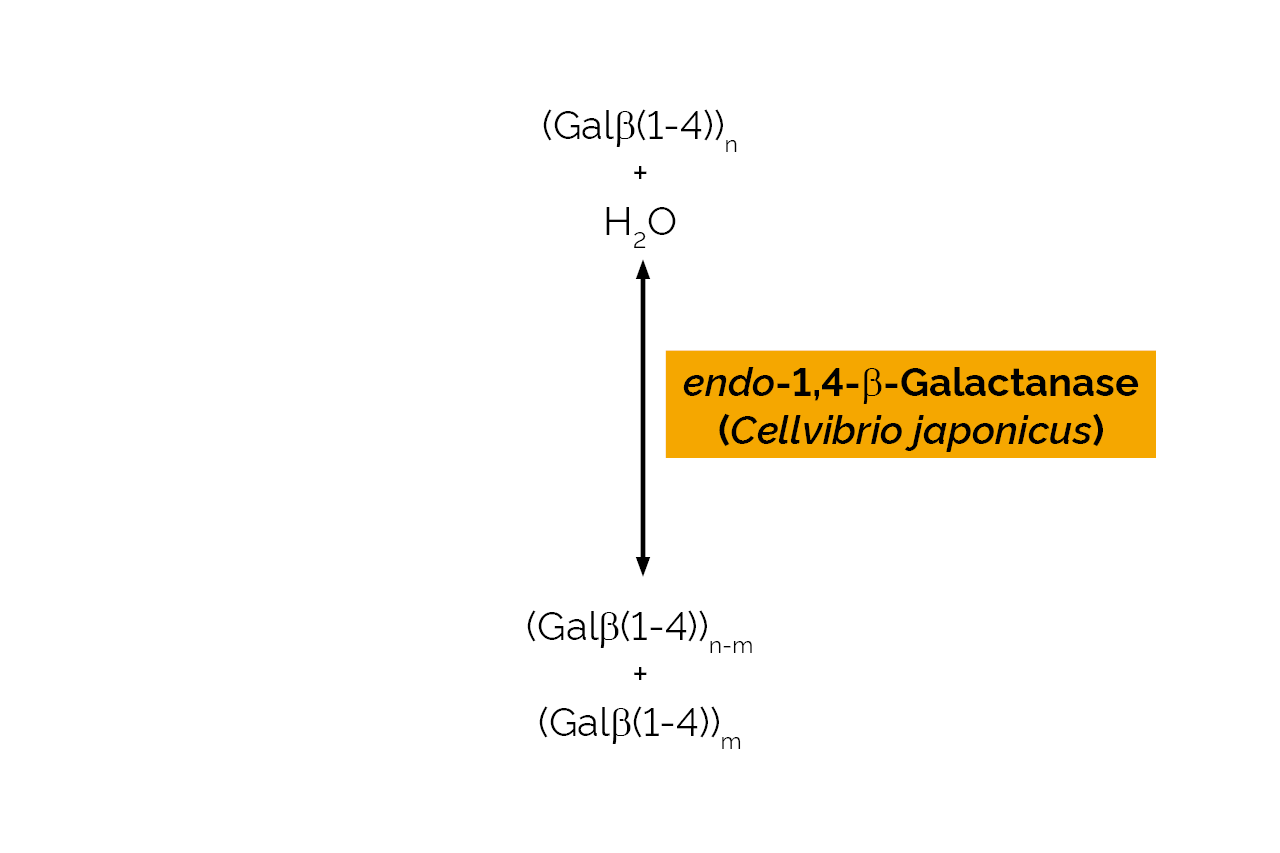
endo-1,4-β-Galactanase (Cellvibrio japonicus)
1,500 Units
This product has been discontinued
This product has been discontinued (read more).
High purity recombinant endo-1,4-β-Galactanase (Cellvibrio japonicus) for use in research, biochemical enzyme assays and in vitro diagnostic analysis.
Explore all our available CAZy enzyme products.
Related Products
Related Carbohydrates
Associated Enzymes
Publications

Guan, J. & Li, S. P. (2010). Journal of Pharmaceutical and Biomedical Analysis, 51(3), 590-598.
Guan, J. & Li, S. P. (2010). Journal of Pharmaceutical and Biomedical Analysis, 51(3), 590-598.
Polysaccharides isolated from traditional Chinese medicines (TCMs) exhibit multiple pharmacological activities. However, quality control of polysaccharides is a challenge because of their complicate structure and macro-molecular mass. In this study, saccharide mapping based on specific enzymatic digestion of polysaccharides and chromatographic analysis was proposed to discriminate the polysaccharides from different TCMs. Endo-carbohydrase such as glucanase, arabinanase, xylanase, galactanase, cellulase, amylase and pectinase were used for enzymatic digestion of polysaccharides from 9 TCMs namely Panax ginseng, P. notoginseng, P. quinquefolium, Cordyceps sinensis, C. militaris, Ganoderma lucidum, G. sinense, Astragalus membranaceus and Angelica sinensis. By using high performance size exclusion chromatography (HPSEC) as well as derivatization with 1-Phenyl-3-methyl-5-pyrazolone (PMP) and HPLC analysis, the enzymatic hydrolysis properties of polysaccharides and their saccharide mapping were determined. The polysaccharides from 9 TCMs were firstly successfully distinguished based on their characteristic saccharide maps, which is helpful to improve the quality control of polysaccharides.
Safety Information
Download Safety Data Sheet
Select a specific region and the Safety Data Sheet will open in a new window. Please make sure your browser doesn’t block pop-up windows