
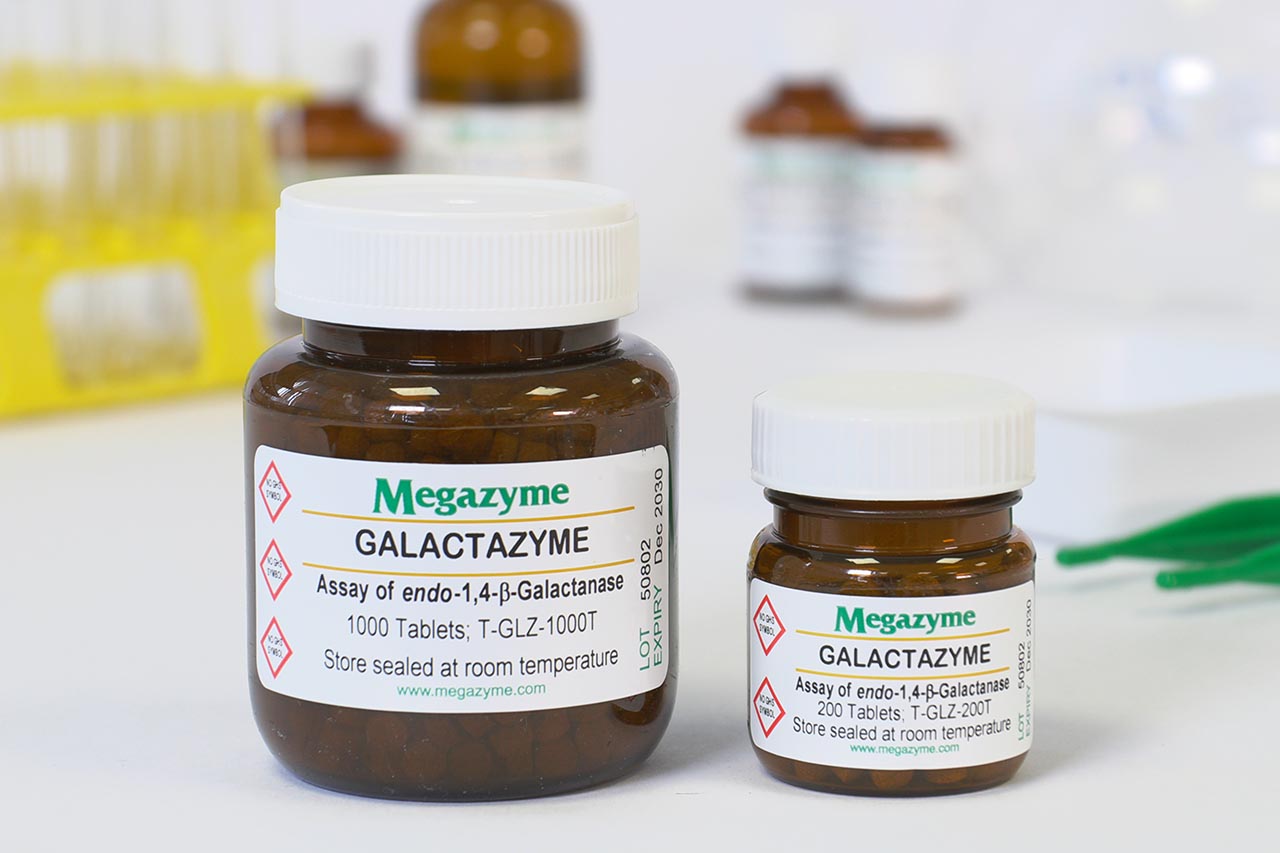
Galactazyme Tablets
200 Tablets
This product has been discontinued
These products have been discontinued (read more).
High purity dyed and crosslinked Galactazyme tablets for the measurement of enzyme activity, for research, biochemical enzyme assays and in vitro diagnostic analysis.
For the assay of endo-1,4-β-D-galactanase. Containing AZCL-Galactan (potato).
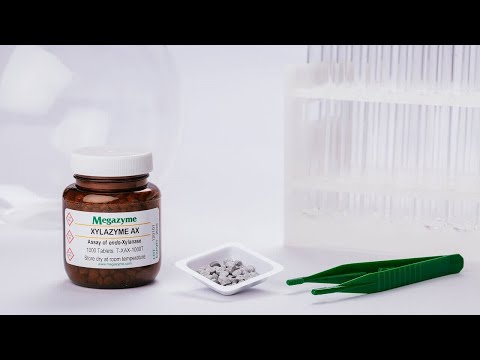
Please note the video above shows the protocol for assay of endo-xylanase using xylazyme tablets. The procedure for the assay of endo-1,4-β-galactanase using Galactazyme Tablets is equivalent to this.
View our complete list of enzyme tablet tests.
Related Products
Related Carbohydrates
Associated Enzymes
Publications

de Vries, R. P., Pařenicová, L., Hinz, S. W. A., Kester, H. C. M., Beldman, G., Benen, J. A. E. & Visser, J. (2002). European Journal of Biochemistry, 269(20), 4985-4993.
de Vries, R. P., Pařenicová, L., Hinz, S. W. A., Kester, H. C. M., Beldman, G., Benen, J. A. E. & Visser, J. (2002). European Journal of Biochemistry, 269(20), 4985-4993.
The Aspergillus niger β-1,4-endogalactanase encoding gene (galA) was cloned and characterized. The expression of galA in A. niger was only detected in the presence of sugar beet pectin, D-galacturonic acid and L-arabinose, suggesting that galA is coregulated with both the pectinolytic genes as well as the arabinanolytic genes. The corresponding enzyme, endogalactanase A (GALA), contains both active site residues identified previously for the Pseudomonas fluorescens β-1,4-endogalactanase. The galA gene was overexpressed to facilitate purification of GALA. The enzyme has a molecular mass of 48.5 kDa and a pH optimum between 4 and 4.5. Incubations of arabinogalactans of potato, onion and soy with GALA resulted initially in the release of D-galactotriose and D-galactotetraose, whereas prolonged incubation resulted in D-galactose and D-galactobiose, predominantly. MALDI-TOF analysis revealed the release of L-arabinose substituted D-galactooligosaccharides from soy arabinogalactan. This is the first report of the ability of a β-1,4-endogalactanase to release substituted D-galacto-oligosaccharides. GALA was not active towards D-galacto-oligosaccharides that were substituted with D-glucose at the reducing end.
Safety Information
Download Safety Data Sheet
Select a specific region and the Safety Data Sheet will open in a new window. Please make sure your browser doesn’t block pop-up windows

Receive Megazyme’s latest articles, news, product introductions and promotions
Customers also viewed
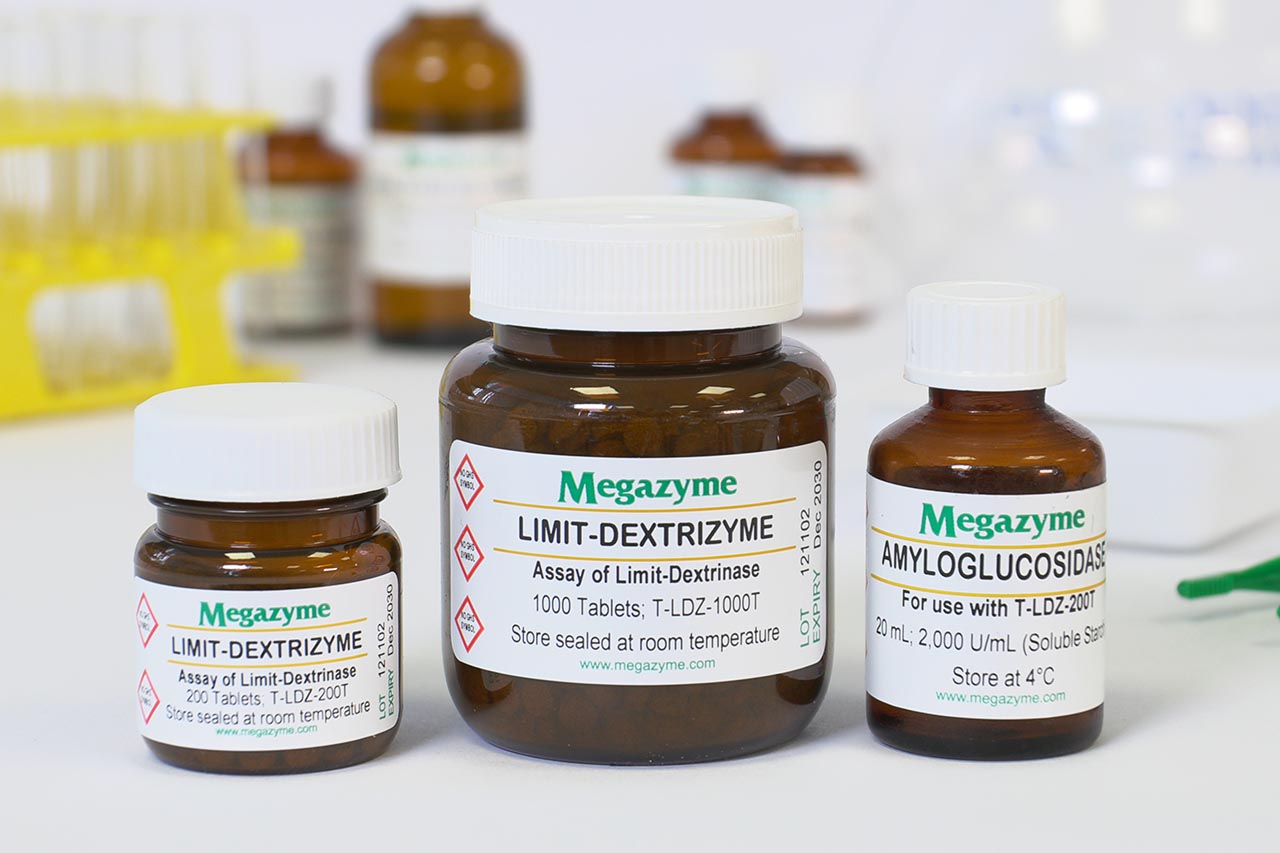
Limit-Dextrizyme Tablets
700005104 / T-LDZ-200T200 Tablets
Limit-Dextrizyme Tablets
Discontinued / T-LDZ-1000T1,000 Tablets
Galactazyme Tablets
T-GLZ-200T200 Tablets
Galactazyme Tablets
T-GLZ-1000T1,000 Tablets
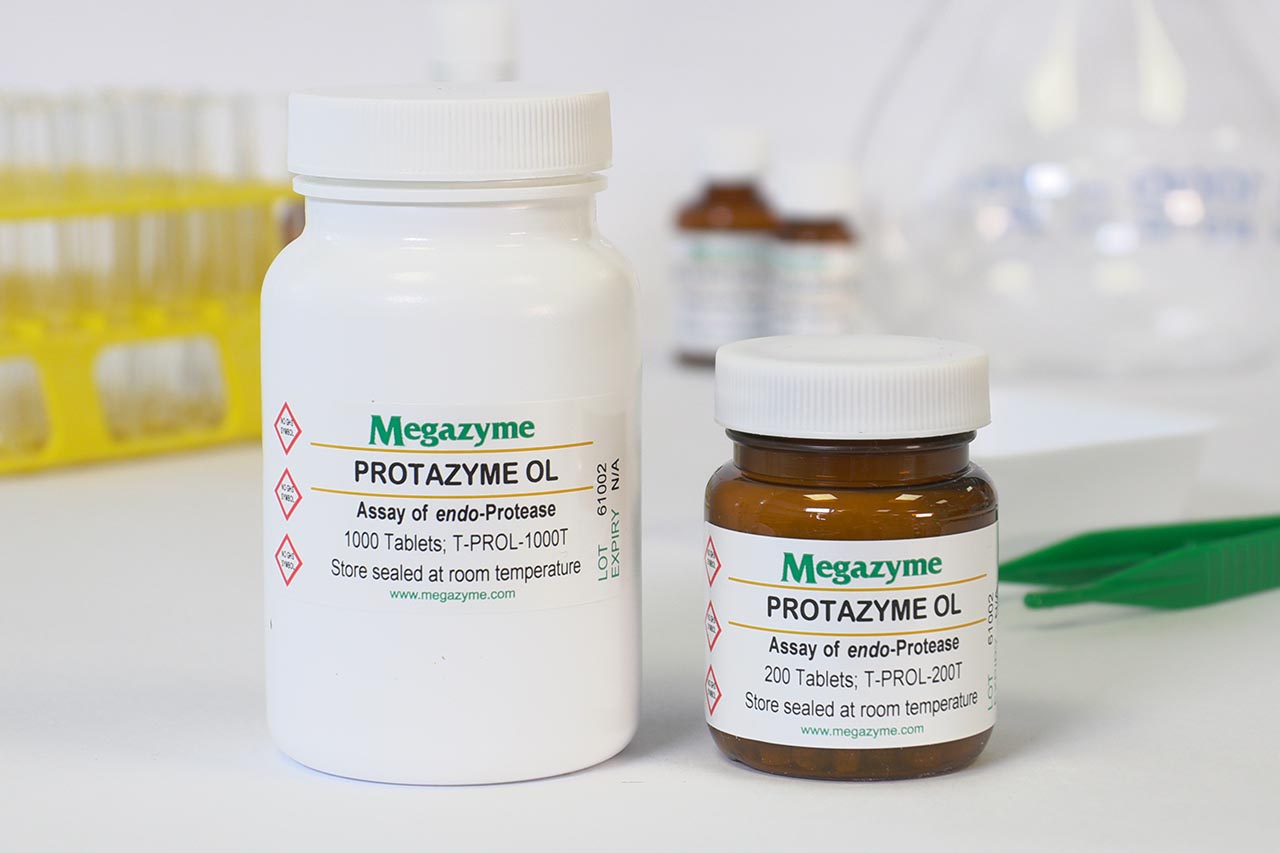
Protazyme OL Tablets
T-PROL-200T200 Tablets
Protazyme OL Tablets
T-PROL-1000T1,000 Tablets
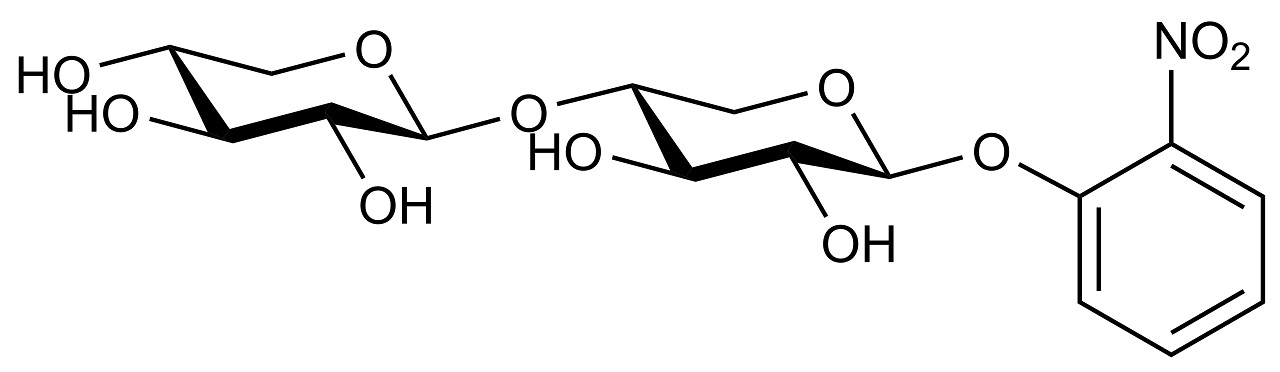
2-Nitrophenyl-β-xylobioside
O-ONPX2-5MG5 mg
2-Nitrophenyl-β-xylobioside
O-ONPX2-25MG25 mg
Limit-Dextrizyme Tablets
700005104 / T-LDZ-200T200 Tablets
Limit-Dextrizyme Tablets
Discontinued / T-LDZ-1000T1,000 Tablets


