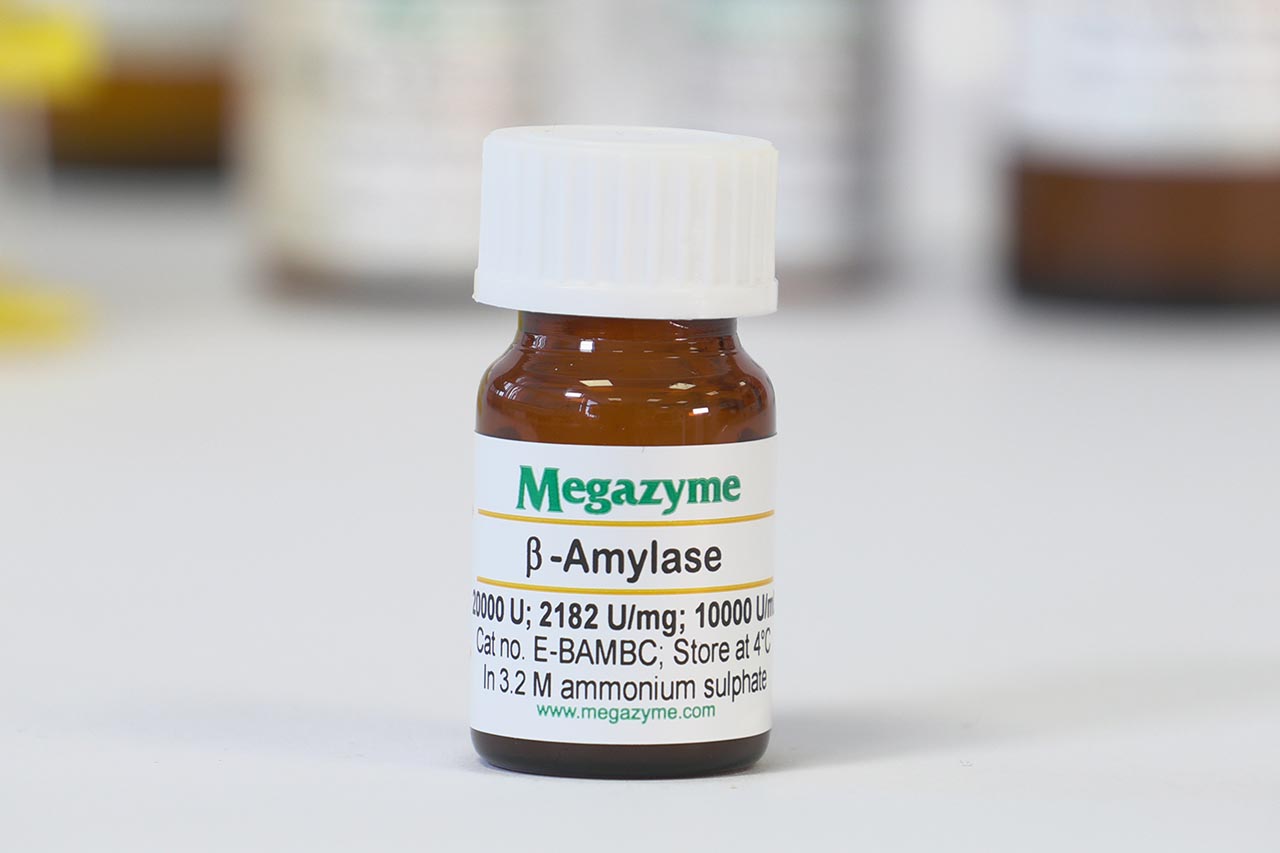
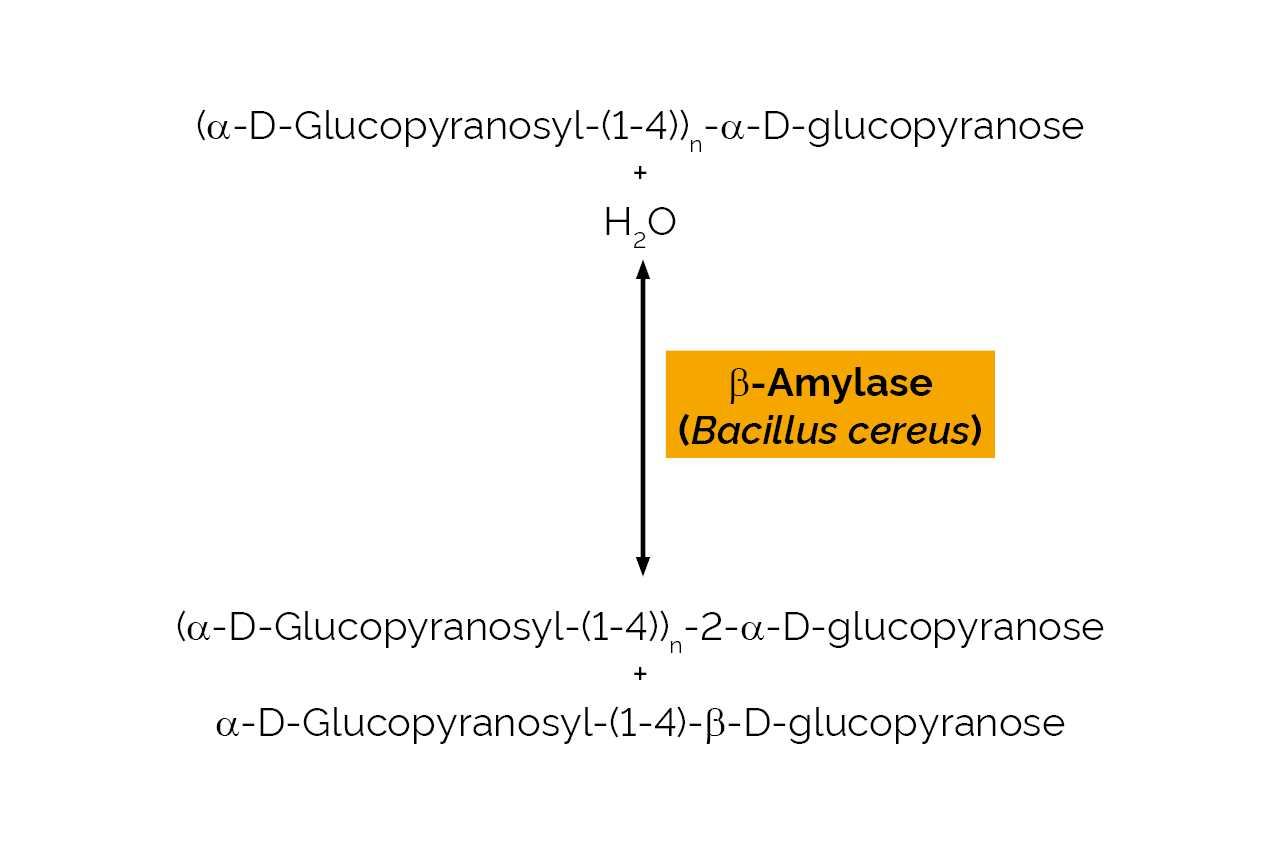
β-Amylase (Bacillus cereus)
20,000 Units
This product has been discontinued
This product has been discontinued (read more).
High purity recombinant β-Amylase (Bacillus cereus) for use in research, biochemical enzyme assays and in vitro diagnostic analysis.
Need other enzymes? See our full list of CAZy enzyme products.
Related Products
Similar Products
Related Carbohydrates
Colourimetric Substrates
Publications

Reliability factor for identification of amylolytic enzyme activity in the optimized starch-iodine assay.
Gaenssle, A. L., van der Maarel, M. J. & Jurak, E. (2020). Analytical Biochemistry, 113696.
Reliability factor for identification of amylolytic enzyme activity in the optimized starch-iodine assay.
Gaenssle, A. L., van der Maarel, M. J. & Jurak, E. (2020). Analytical Biochemistry, 113696.
Amylolytic enzymes are a group of proteins degrading starch to its constitutional units. For high-throughput screening, simple yet accurate methods in addition to the reducing ends assays are required. In this article, the iodine assay, a photometric assay based on the intensely colored starch-iodine complex, was adapted to enable accurate and objective differentiation between enzyme and background activity using a newly introduced mathematical factor. The method was further improved by designing a simple setup for multiple time point detection and discussing the applicability of single wavelength measurements.
Mass spectrometry-based identification of carbohydrate anomeric configuration to determine the mechanism of glycoside hydrolases.
Shen, Y. H., Tsai, S. T., Liew, C. Y. & Ni, C. K. (2019). Carbohydrate Research, 476, 53-59.
Mass spectrometry-based identification of carbohydrate anomeric configuration to determine the mechanism of glycoside hydrolases.
Shen, Y. H., Tsai, S. T., Liew, C. Y. & Ni, C. K. (2019). Carbohydrate Research, 476, 53-59.
A rapid mass spectrometry method for determining the anomeric configuration of the sugar at the reducing end of an oligosaccharide was demonstrated. The method was employed to identify the nascent anomeric configuration (i.e., before significant mutarotation occurs) of oligosaccharides released by carbohydrate-active enzymes, which enabled determination of the enzyme mechanism. This method was validated by applying it to various enzymes, including α-glucosidase, β-glucosidases, endoglycoceramidase II, β-galactosidase, and β-amylase.
Gonzalez, A., Wang, Y. J., Staroszczyk, H., Brownmiller, C. & Lee, S. O. (2018). Starch‐Stärke, In Press.
Gonzalez, A., Wang, Y. J., Staroszczyk, H., Brownmiller, C. & Lee, S. O. (2018). Starch‐Stärke, In Press.
Naringenin exhibits many health benefits but it has limited water solubility and consequently low bioavailability. The objective of this study was to investigate the effect of hydroxypropylation and enzymatic treatments on starch complexation with naringenin. Potato starch and Hylon VII were hydroxypropylated to two substitution degrees and then debranched or debranched/β-amylase treated prior to complexing with naringenin. Both soluble and insoluble complexes were recovered and characterized. An increase in hydroxypropylation level improved recovery of soluble complexes, while total recovery remained unchanged; the β-amylase treatment further increased soluble complex recovery. For the same treatment, the naringenin content was greater in Hylon VII complexes (6.72-15.15mg/g) than in potato starch complexes (2.45-11.18 mg/g). Insoluble complexes comprised greater naringenin contents (3.91-15.15 mg/g) compared to soluble counterparts (2.45-9.43 mg/g). All complexes exhibited a mixture of B+V X-ray diffraction pattern. This work is the first one to demonstrate that hydroxypropylated starch formed complexes with naringenin, and an appropriate level of beta-amylase hydrolysis further improved their complexation.
Villas-Boas, F. & Franco, C. M. (2016). Food Hydrocolloids, 52, 795-803.
Villas-Boas, F. & Franco, C. M. (2016). Food Hydrocolloids, 52, 795-803.
Retrograded and debranched starch, known as resistant starch type 3 (RS3), is resistant to digestive enzymes and exhibits a behavior similar to that of dietary fibers. In this study, the effect of β- and α-amylase on the digestibility and structural characteristics of potato and arrowroot starches was evaluated and compared. Starch samples were gelatinized, hydrolyzed by β- or fungal α-amylase, debranched, cooled (4°C/16 h), precipitated with ethanol, and dried. Debranched and gelatinized starch samples were used as control. The degrees of hydrolysis for the two starches were similar (~25%), regardless of enzyme used. In both starches, β-amylase resulted in a significant decreases in average degree of polymerization (DPn) of short chains (from 16.5 to 12) and in proportion of these chains, while fungal α-amylase caused a significant decrease in DPn of long chains (from 38.9 to 26.8 and from 35.1 to 28.2 for potato and arrowroot starches, respectively) plus a significant increase in proportion of short chains. Gelatinization enthalpy and relative crystallinity of modified starches increased with amylolysis, particularly when α-amylase was used. RS3 content was 20.2% in the debranched potato starch and increased to 36.5% with amylolysis, regardless of the enzyme used before debranching. However, slowly digestible starch content increased from 8.5% to 27.8% when α-amylase was used in this starch. Meanwhile, arrowroot starch had 47.5% and 53.4% RS3 contents when β- and α-amylase were used, respectively. Structural characteristics, particularly the amylopectin branch chain length distribution, are important factors responsible for RS3 formation when amylolysis precedes debranching.
Arijaje, E. O. & Wang, Y. J. (2015). Journal of Agricultural and Food Chemistry, 63(16), 4202-4210.
Arijaje, E. O. & Wang, Y. J. (2015). Journal of Agricultural and Food Chemistry, 63(16), 4202-4210.
The solubility of starch-inclusion complexes affects the digestibility and bioavailability of the included molecules. Acetylation with two degrees of substitution, 0.041 (low) and 0.091 (high), combined without or with a β-amylase treatment was employed to improve the yield and solubility of the inclusion complex between debranched potato starch and oleic acid. Both soluble and insoluble complexes were recovered and analyzed for their degree of acetylation, complexation yields, molecular size distributions, X-ray diffraction patterns, and thermal properties. Acetylation significantly increased the amount of recovered soluble complexes as well as the complexed oleic acid in both soluble and insoluble complexes. High-acetylated debranched-only starch complexed the highest amount of oleic acid (38.0 mg/g) in the soluble complexes; low-acetylated starch with or without the β-amylase treatment resulted in the highest complexed oleic acid in the insoluble complexes (37.6–42.9 mg/g). All acetylated starches displayed the V-type X-ray pattern, and the melting temperature generally decreased with acetylation. The results indicate that starch acetylation with or without the β-amylase treatment can improve the formation and solubility of the starch–oleic acid complex.
Safety Information
Download Safety Data Sheet
Select a specific region and the Safety Data Sheet will open in a new window. Please make sure your browser doesn’t block pop-up windows

Receive Megazyme’s latest articles, news, product introductions and promotions
Customers also viewed
β-Amylase (Barley) Powder
700004190 / E-BARBP-2G2 g
β-Amylase (Barley)
Discontinued / E-BARBP-1G1 g
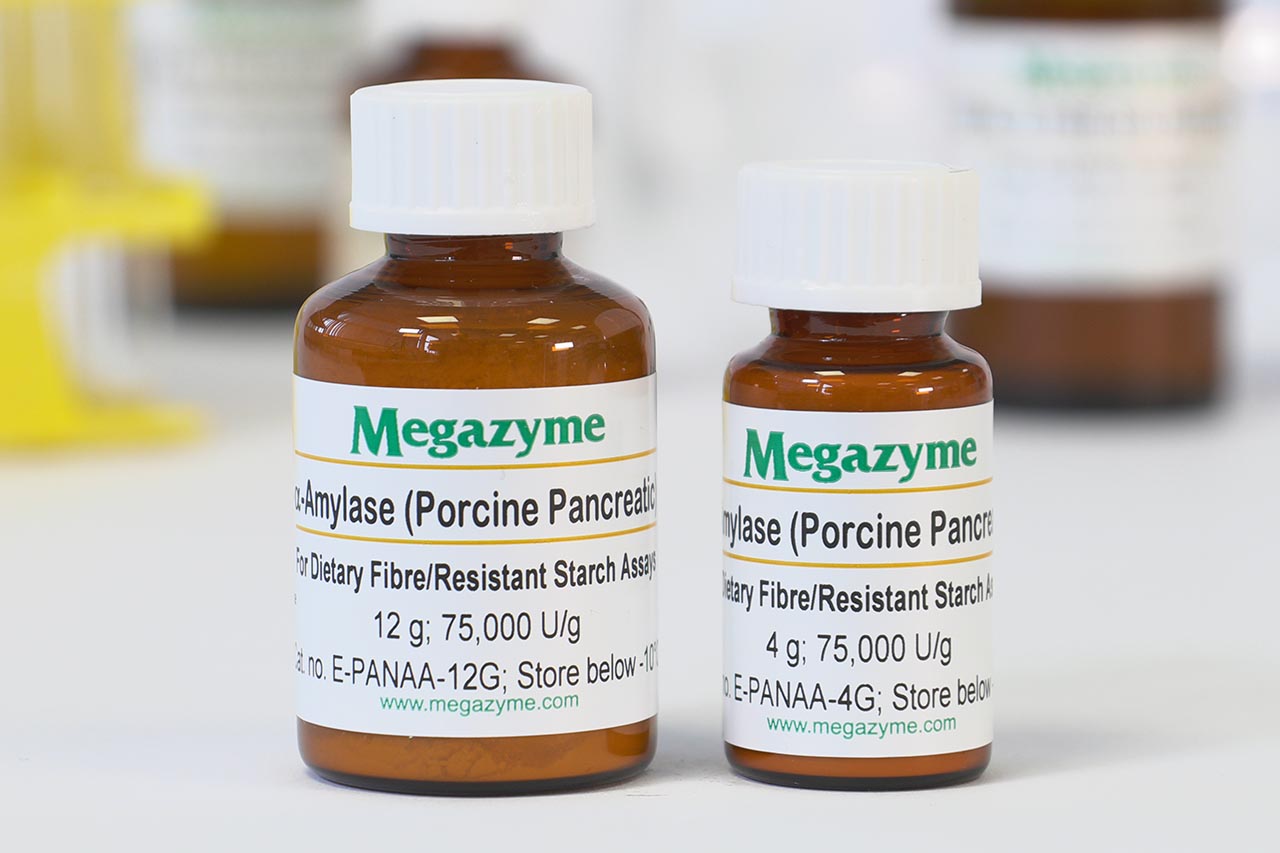
α-Amylase (Porcine Pancreatic)
700004230 / E-PANAA-12G12 g / 900 KU
α-Amylase (Porcine Pancreatic)
Discontinued / E-PANAA-4G4 g / 300 KU
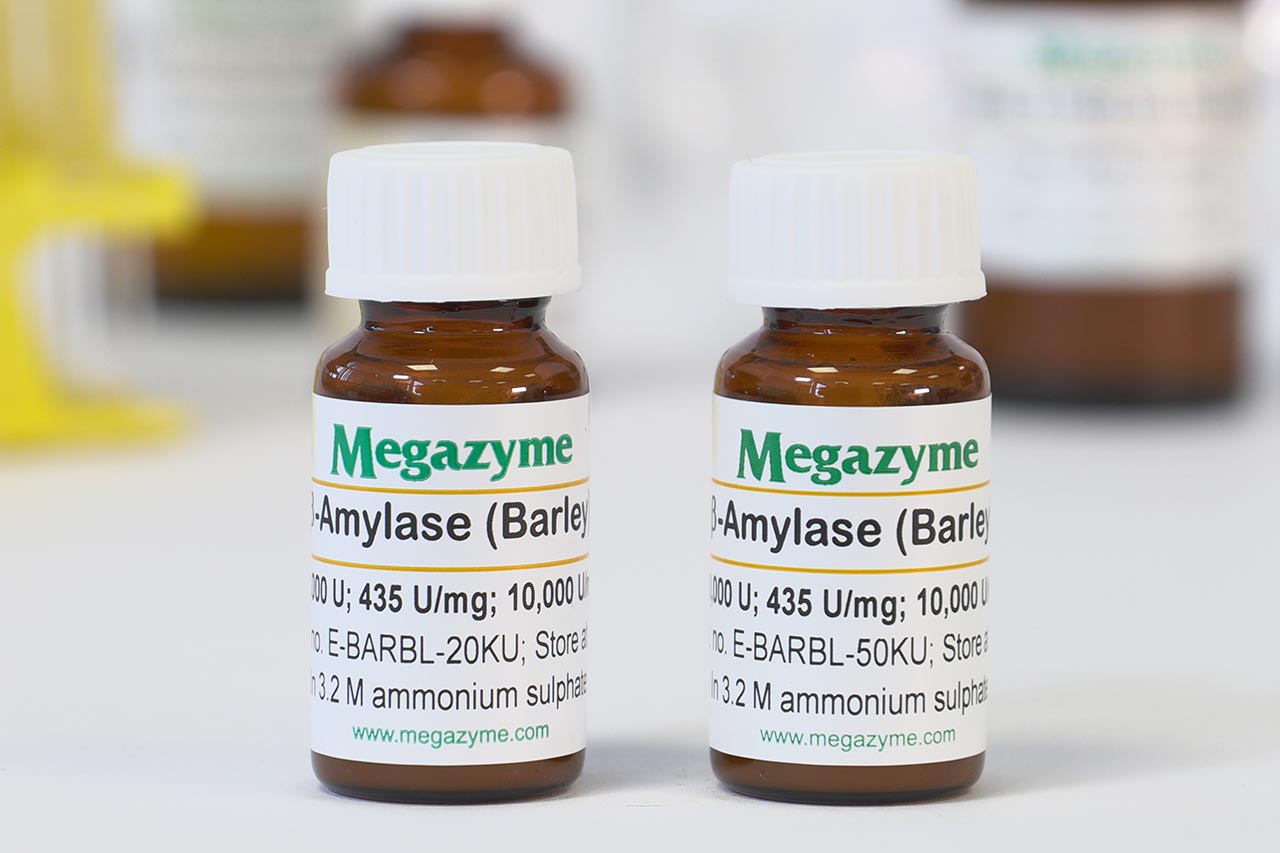
β-Amylase (Barley)
E-BARBL-50KU50,000 Units
β-Amylase (Barley)
E-BARBL-20KU20,000 Units
100 assays (manual) / 1000 assays (microplate) / 1100 assays (auto-analyser)