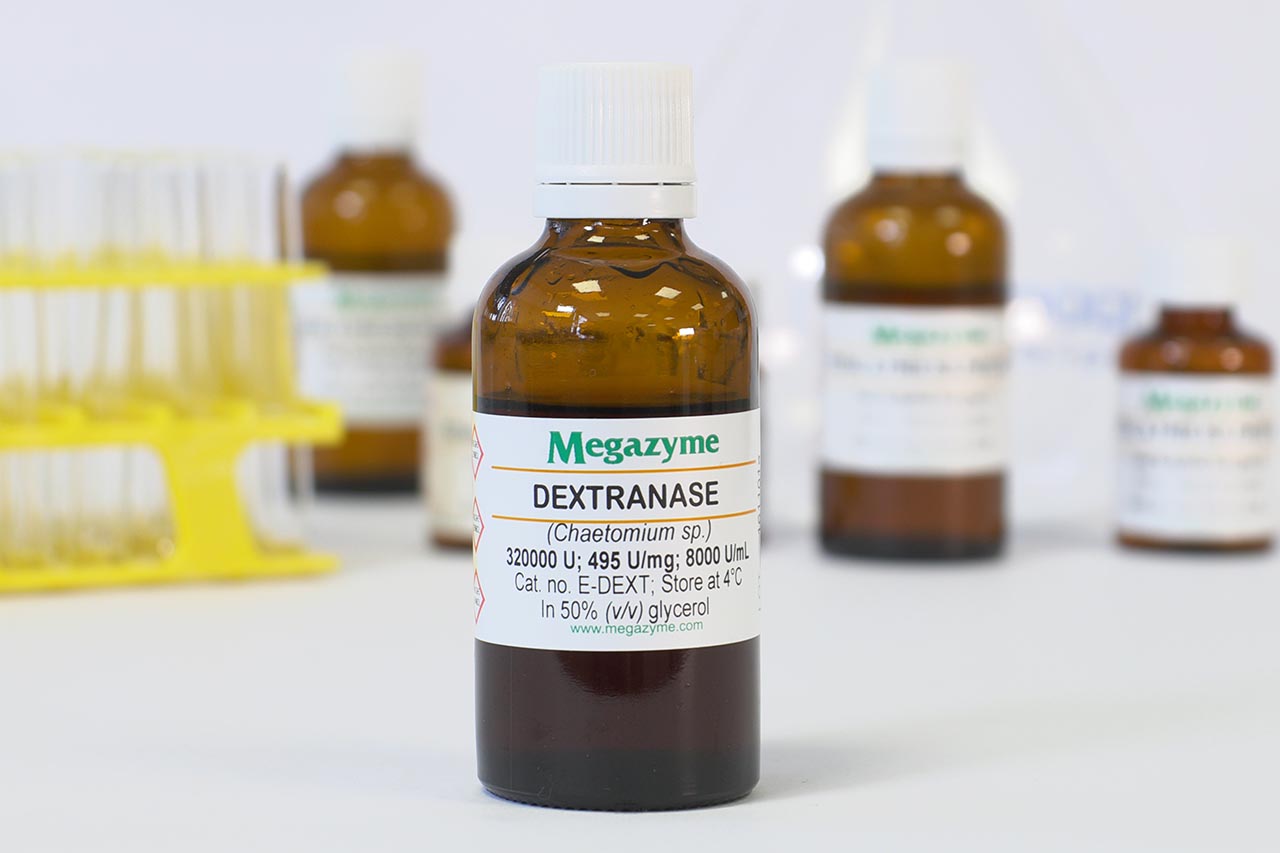
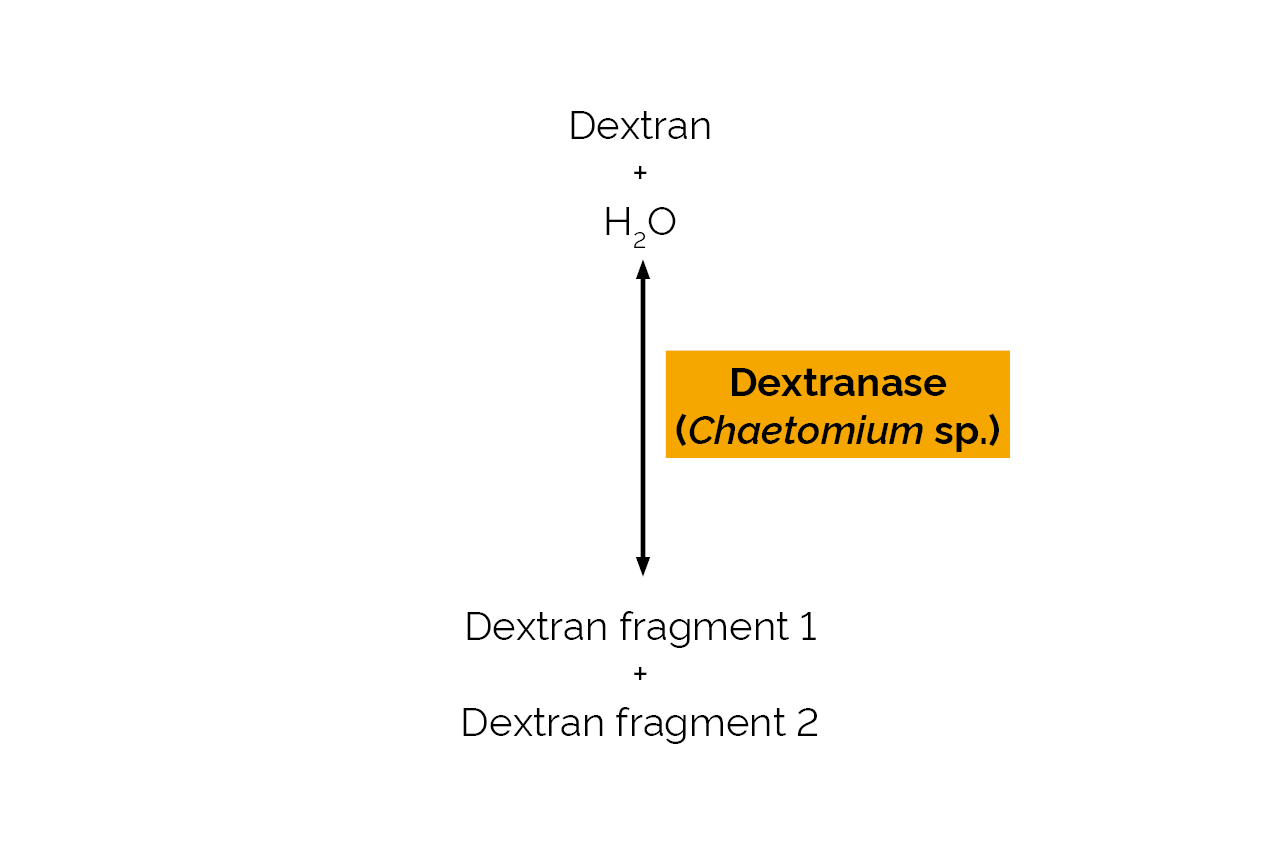
Dextranase (Chaetomium sp.)
320,000 Units at 40oC
This product has been discontinued
~ 607 U/mg protein at pH 5.0 and 50oC
This product has been discontinued (read more).
High purity Dextranase (Chaetomium sp.) for use in research, biochemical enzyme assays and in vitro diagnostic analysis.
See entire list of Carbohydrate Active enZYmes.
Related Products
Colourimetric Substrates
Publications

Detailed structural characterization of glucans produced by glucansucrases from Leuconostoccitreum TMW 2.1194.
Münkel, F., Bechtner, J., Eckel, V., Fischer, A., Herbi, F., Jakob, F. & Wefers, D. (2019). Journal of Agricultural and Food Chemistry, 67(24), 6856-6866.
Detailed structural characterization of glucans produced by glucansucrases from Leuconostoccitreum TMW 2.1194.
Münkel, F., Bechtner, J., Eckel, V., Fischer, A., Herbi, F., Jakob, F. & Wefers, D. (2019). Journal of Agricultural and Food Chemistry, 67(24), 6856-6866.
The water kefir organism Leuconostoc citreum TMW 2.1194 forms highly branched dextrans with O3- and O4-bound side chains. To obtain detailed information on the enzymatic synthesis of these polymers, the four glucansucrases encoded by Leuconostoc citreum TMW 2.1194 were cloned, heterologously expressed, and used for polysaccharide production. Molecular and macromolecular structure of the synthesized glucans were analyzed by methylation analysis, two-dimensional NMR spectroscopy, oligosaccharide analysis after partial hydrolysis, and asymmetric flow field-flow fractionation. It was demonstrated that two glucansucrases form insoluble glucans with variously branched dextran sections and varying portions of consecutive, 1,3-linked glucose units. In contrast, the other two glucansucrases synthesized O3-(Lc6255) and O4-branched (Lc1785) soluble dextrans. Analysis, isolation, and characterization of enzymatically liberated oligosaccharides showed that monomeric and elongated side chains are abundant in both polysaccharides. From the structures and size distributions it was concluded that Lc1785 is mainly responsible for synthesis of fermentatively produced soluble dextrans.
Safety Information
Download Safety Data Sheet
Select a specific region and the Safety Data Sheet will open in a new window. Please make sure your browser doesn’t block pop-up windows

Receive Megazyme’s latest articles, news, product introductions and promotions
Customers also viewed
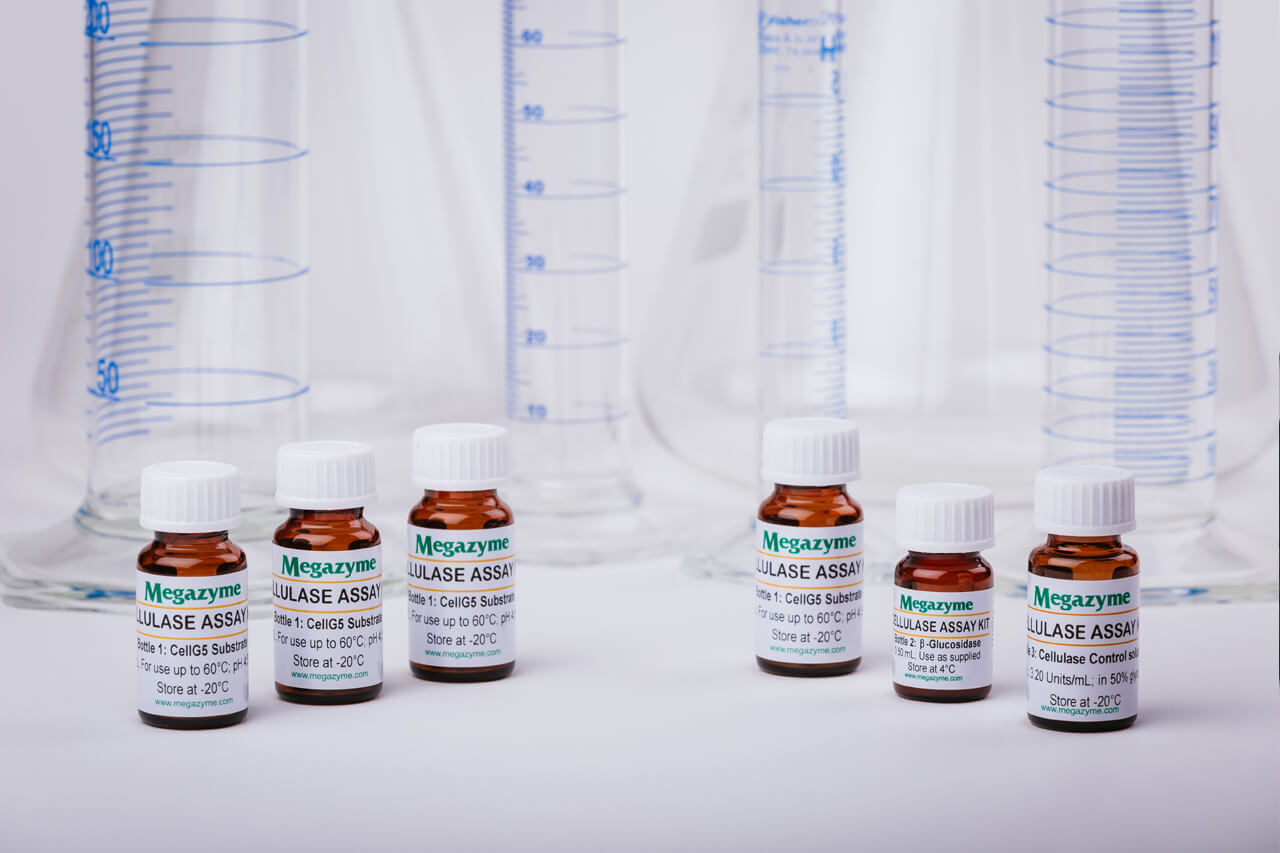
120 / 240 assays (manual) / 480 assays (auto-analyser)
Cellulase Assay Kit (CellG5 Method)
700004272 / K-CellG5-4V120 / 240 assays (manual) / 480 assays (auto-analyser)
Cellulase Assay Kit (CellG5 Method)
Discontinued / K-CellG5-2V60 / 120 assays (manual) / 240 assays (auto-analyser)