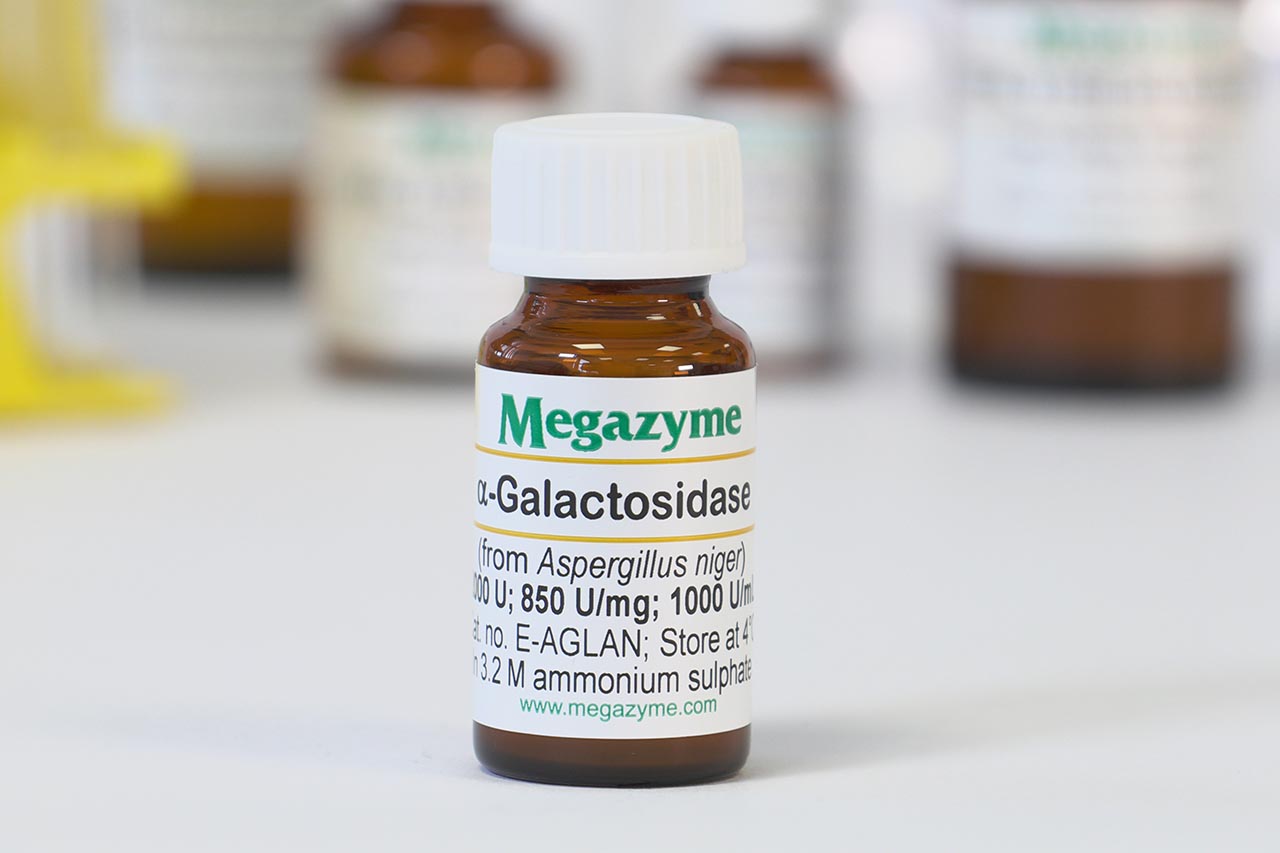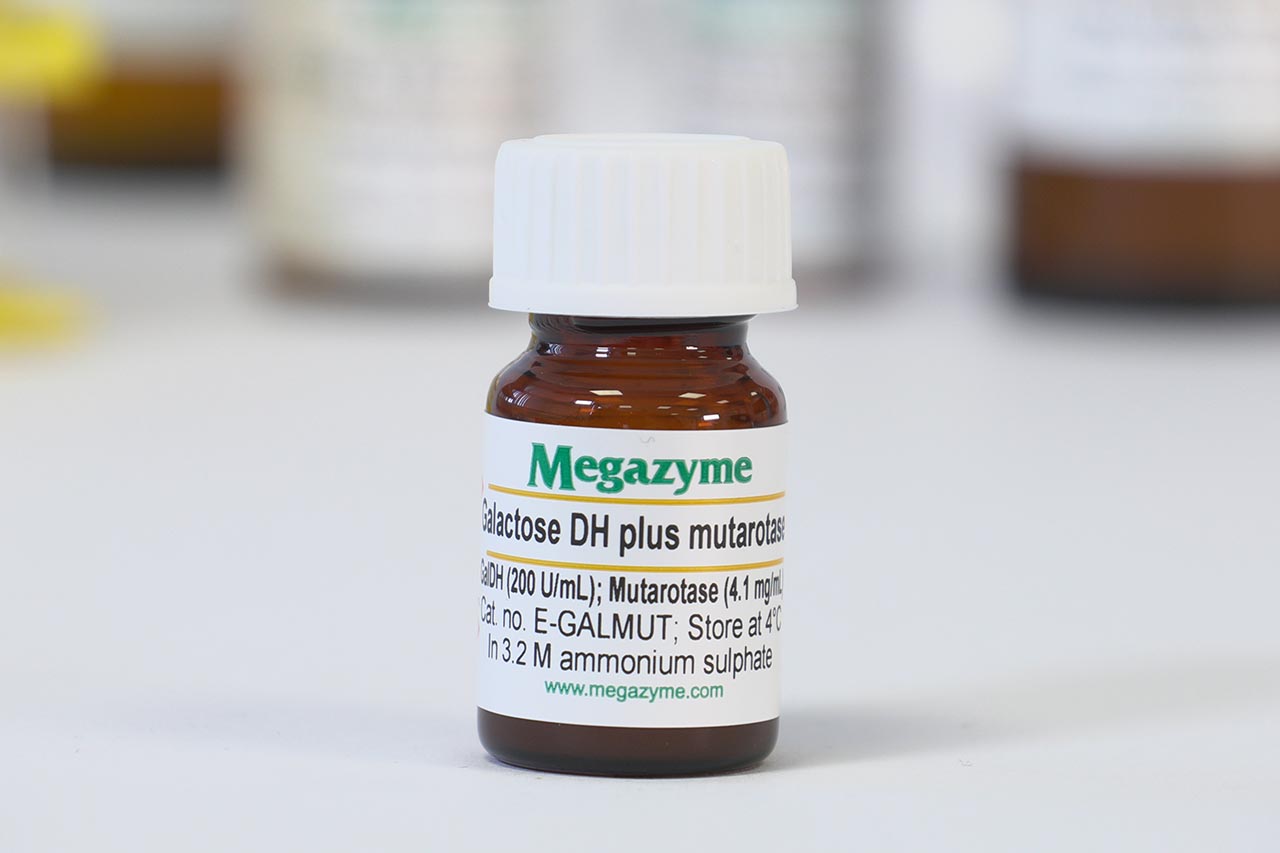
Galactose dehydrogenase - Galactose mutarotase
1 mL; galactose dehydrogenase (200 U/mL) /
galactose mutarotase (4 mg/mL)
This product has been discontinued
Galactose mutarotase: 5.1.3.3
Galactose mutarotase: 9031-76-9
Galactose mutarotase: aldose 1-epimerase; aldose 1-epimerase
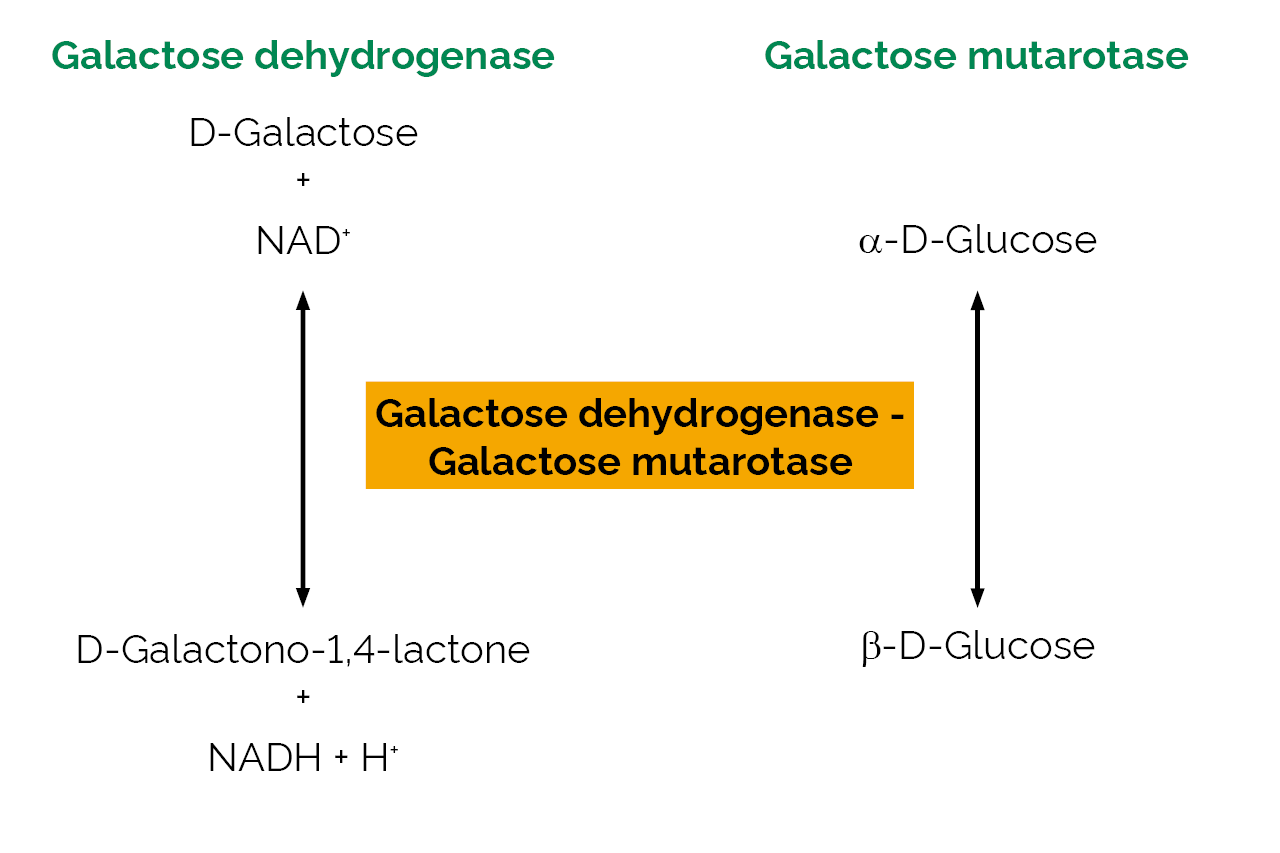
(1) α-D-Galactose ↔ β-D-Galactose.
The β-D-Galactose is oxidised by NAD+ to D-galactonic acid in the presence of β-galactose dehydrogenase (GALDH) at pH 7.5 (2).
(2) β-D-Galactose + NAD+ → D-galactonic acid + NADH + H+
Galactose mutarotase: ~ 4 mg/mL
This product has been discontinued.
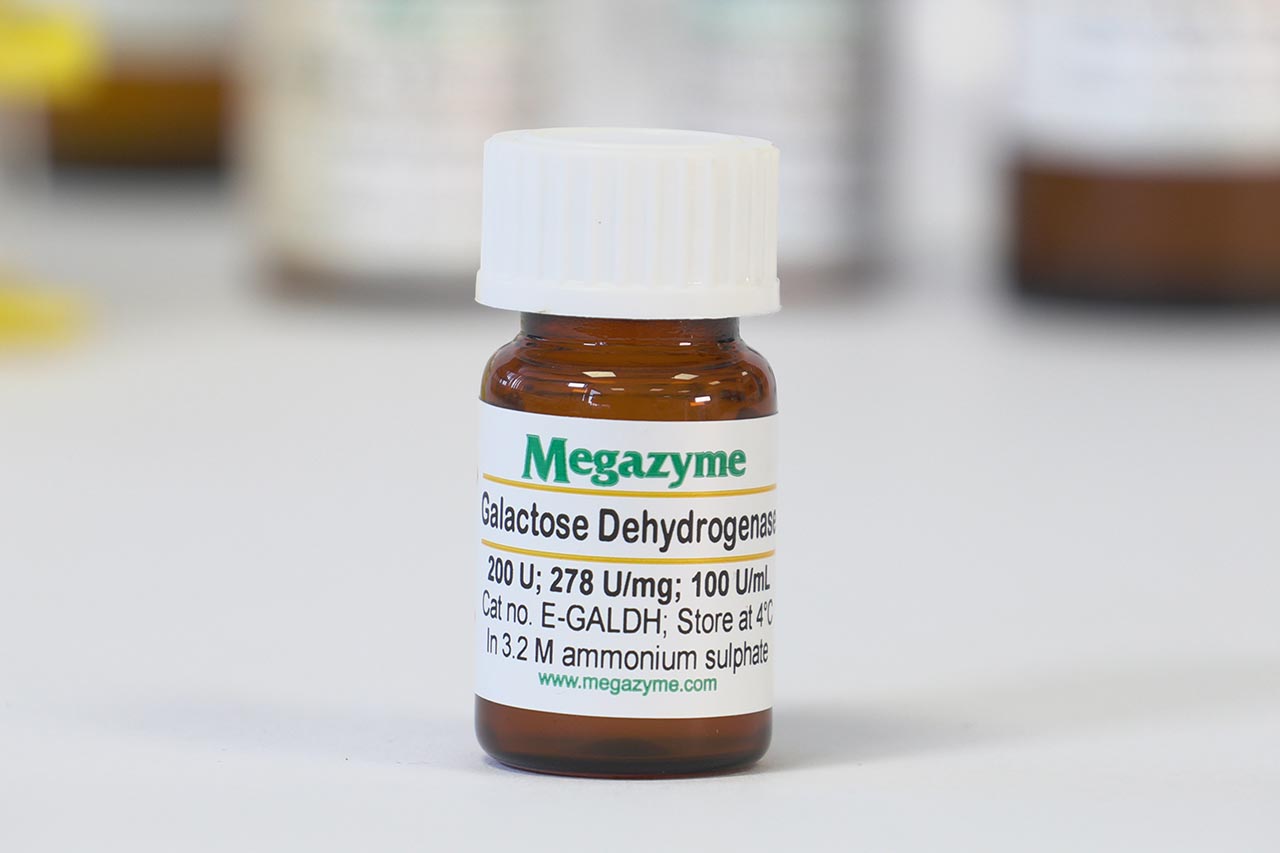
High purity Galactose dehydrogenase (Escherichia coli) / Galactose mutarotase (Escherichia coli) for use in research, biochemical enzyme assays and analytical testing applications.
Can be employed for the rapid determination of D-galactose or L-arabinose. See Lactose/D-Galactose (Rapid) Assay Kit (K-LACGAR) for full details.
For use under Patent No. US 7,785,771 B2 and EP1 828 407 (GB, FR, IE, DE)
Browse a wide range of enzymes for analytical applications.
Related Products
Related Products
Publications

Charnock, S. C. & McCleary, B. V. (2006). Irish Patent No. S84280, UK Patent No. 1828407, German Patent No. 1828407, French Patent No. 1828407 and USA Patent No. US7, 785, 771/11/722,000.
Charnock, S. C. & McCleary, B. V. (2006). Irish Patent No. S84280, UK Patent No. 1828407, German Patent No. 1828407, French Patent No. 1828407 and USA Patent No. US7, 785, 771/11/722,000.

Method for the Direct Determination of Available Carbohydrates in Low-Carbohydrate Products Using High-Performance Anion Exchange Chromatography.
Ellingson, D., Potts, B., Anderson, P., Burkhardt, G., Ellefson, W., Sullivan, D., Jacobs, W. & Ragan, R. (2010). Journal of AOAC International, 93(6), 1897-1904.
Method for the Direct Determination of Available Carbohydrates in Low-Carbohydrate Products Using High-Performance Anion Exchange Chromatography.
Ellingson, D., Potts, B., Anderson, P., Burkhardt, G., Ellefson, W., Sullivan, D., Jacobs, W. & Ragan, R. (2010). Journal of AOAC International, 93(6), 1897-1904.
An improved method for direct determination of available carbohydrates in low-level products has been developed and validated for a low-carbohydrate soy infant formula. The method involves modification of an existing direct determination method to improve specificity, accuracy, detection levels, and run times through a more extensive enzymatic digestion to capture all available (or potentially available) carbohydrates. The digestion hydrolyzes all common sugars, starch, and starch derivatives down to their monosaccharide components, glucose, fructose, and galactose, which are then quantitated by high-performance anion-exchange chromatography with photodiode array detection. Method validation consisted of specificity testing and 10 days of analyzing various spike levels of mixed sugars, maltodextrin, and corn starch. The overall RSD was 4.0 across all sample types, which contained within-day and day-to-day components of 3.6 and 3.4, respectively. Overall average recovery was 99.4 (n = 10). Average recovery for individual spiked samples ranged from 94.1 to 106 (n = 10). It is expected that the method could be applied to a variety of low-carbohydrate foods and beverages.
Safety Information
Download Safety Data Sheet
Select a specific region and the Safety Data Sheet will open in a new window. Please make sure your browser doesn’t block pop-up windows

Receive Megazyme’s latest articles, news, product introductions and promotions
Customers also viewed
50 assays (manual) / 500 assays (auto-analyzer)

115 assays (manual) / 1150 assays (microplate) / 1150 assays (auto-analyser)