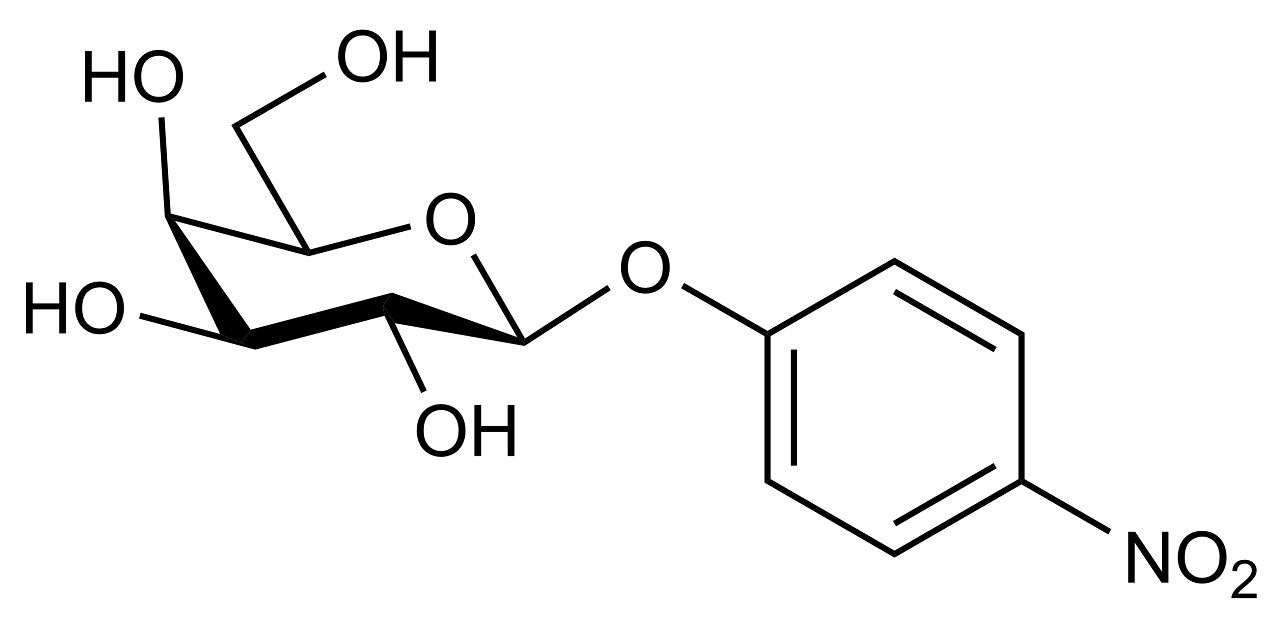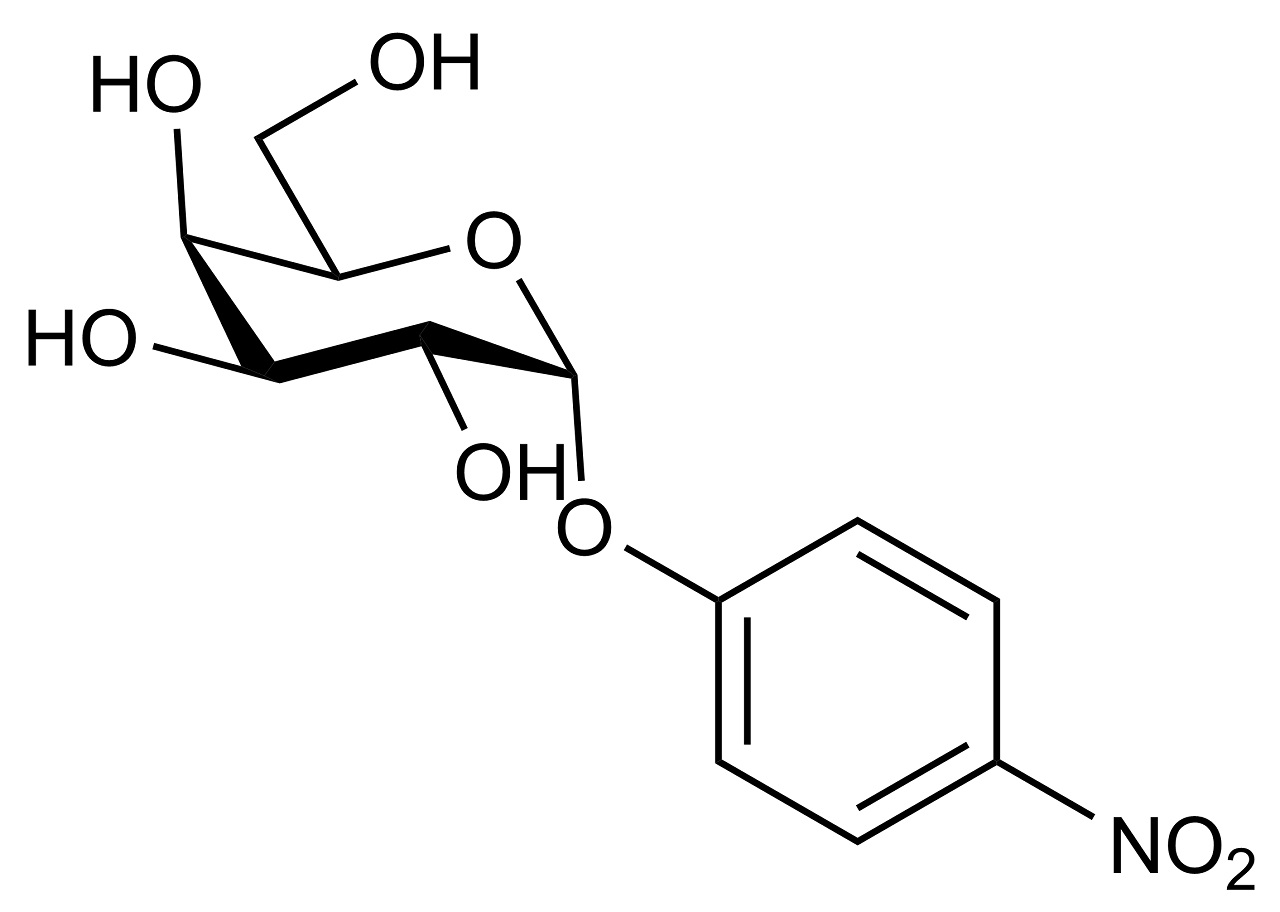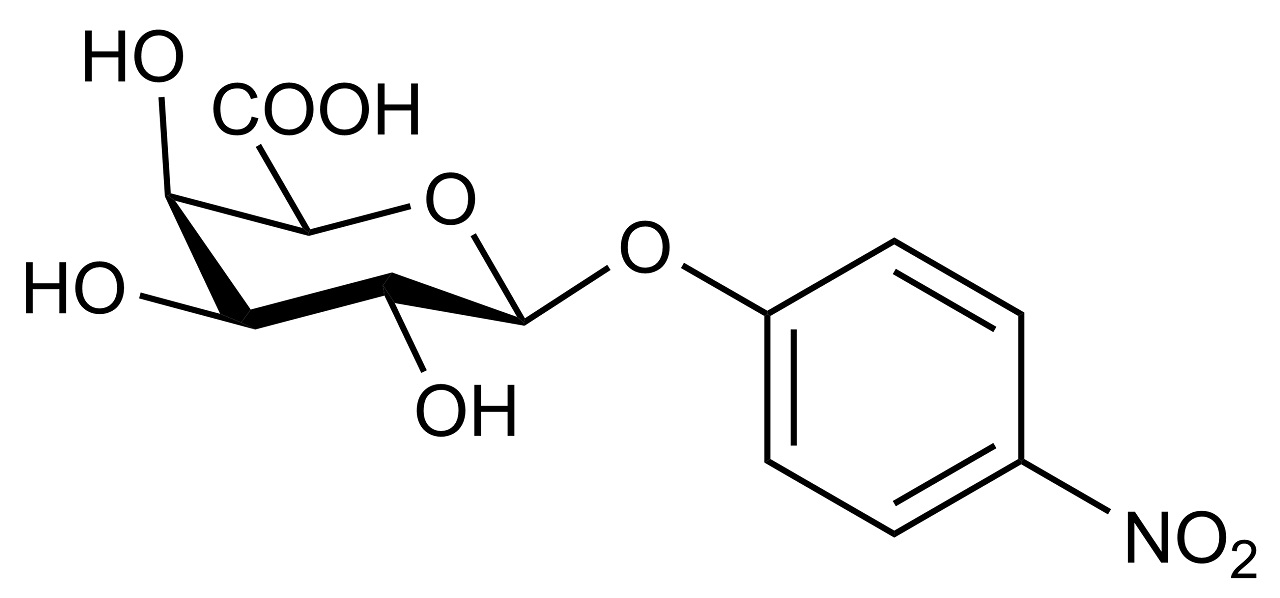
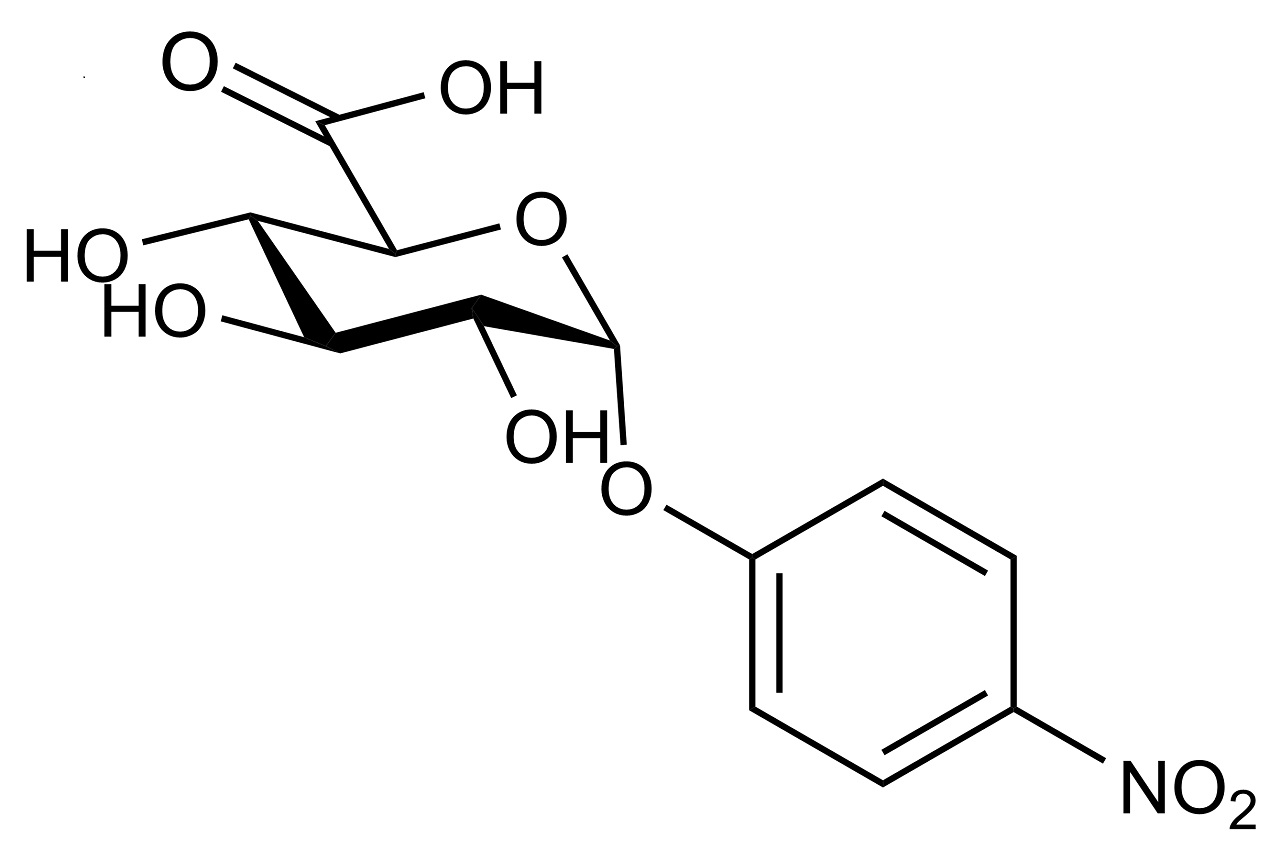
4-Nitrophenyl-β-D-galacturonide
20 mg
This product has been discontinued
This product has been discontinued (read more).
High purity 4-Nitrophenyl-β-D-galacturonide for use in research, biochemical enzyme assays and in vitro diagnostic analysis. This is a colourimetric substrate for the measurement of β-galacturonidase activity.
Discover more of our colourimetric oligosaccharides.
Related Products
Similar Products
Related Products
Publications

Molecular and biochemical analysis of two β-galactosidases from Bifidobacterium infantis HL96.
Hung, M., N., Xia, Z., Hu, N-T. & Lee, B. H. (2001). Applied and Environmental Microbiology, 67(9), 4256-4263.
Molecular and biochemical analysis of two β-galactosidases from Bifidobacterium infantis HL96.
Hung, M., N., Xia, Z., Hu, N-T. & Lee, B. H. (2001). Applied and Environmental Microbiology, 67(9), 4256-4263.
Two genes encoding β-galactosidase isoenzymes, β-galI and β-galIII, from Bifidobacterium infantis HL96 were revealed on 3.6- and 2.4-kb DNA fragments, respectively, by nucleotide sequence analysis of the two fragments. β-galI (3,069 bp) encodes a 1,022-amino-acid (aa) polypeptide with a predicted molecular mass of 113 kDa. A putative ribosome binding site and a promoter sequence were recognized at the 5′ flanking region of β-galI. Further upstream a partial sequence of an open reading frame revealed a putative lactose permease gene transcribing divergently from β-galI. The β-galIII gene (2,076 bp) encodes a 691-aa polypeptide with a calculated molecular mass of 76 kDa. A rho-independent transcription terminator-like sequence was found 25 bp downstream of the termination codon. The amino acid sequences of β-GalI and β-GalIII are homologous to those found in the LacZ and the LacG families, respectively. The acid-base, nucleophilic, and substrate recognition sites conserved in the LacZ family were found in β-GalI, and a possible acid-base site proposed for the LacG family was located in β-GalIII, which featured a glutamate at residue 160. The coding regions of the β-galI and β-galIII genes were each cloned downstream of a T7 promoter for overexpression in Escherichia coli. The molecular masses of the overexpressed proteins, as estimated by polyacrylamide gel electrophoresis on sodium dodecyl sulfate-polyacrylamide gels, agree with their predicted molecular weights. β-GalI and β-GalIII were specific for β-D-anomer-linked galactoside substrates. Both are more active in response to ONPG (o-nitrophenyl-β-D-galactopyranoside) than in response to lactose, particularly β-GalIII. The galacto-oligosaccharide yield in the reaction catalyzed by β-GalI at 37°C in 20% (wt/vol) lactose solution was 130 mg/ml, which is more than six times higher than the maximum yield obtained with β-GalIII. The structure of the major trisaccharide produced by β-GalI catalysis was characterized as O-β-D-galactopyranosyl-(1-3)- O-β-D-galactopyranosyl-(1-4)-D-glucopyranose (3′-galactosyl-lactose).
Marsh, C. A. & Levvy, G. A. (1958). Biochemical Journal, 68(4), 610-617.
Marsh, C. A. & Levvy, G. A. (1958). Biochemical Journal, 68(4), 610-617.
In the first systematic study of the enzyme β-glucuronidase, Masamune showed that oxkidney preparations did not hydrolyse (-)-menthyl α-D-glucuronide, and this compound was also not hydrolysed by mouse-liver β-glucuronidase and by a snail preparation rich in β-glucuronidase and in other simple glycosidases. Nevertheless, although it is not so ubiquitous as the β-glucuronide residue, there is evidence for a naturally occurring α-conjugated glucuronic acid, for example in wheat straw. It has been inferred that uridine diphosphoglucuronic acid also has the α-configuration.
Safety Information
Download Safety Data Sheet
Select a specific region and the Safety Data Sheet will open in a new window. Please make sure your browser doesn’t block pop-up windows

Receive Megazyme’s latest articles, news, product introductions and promotions
Customers also viewed
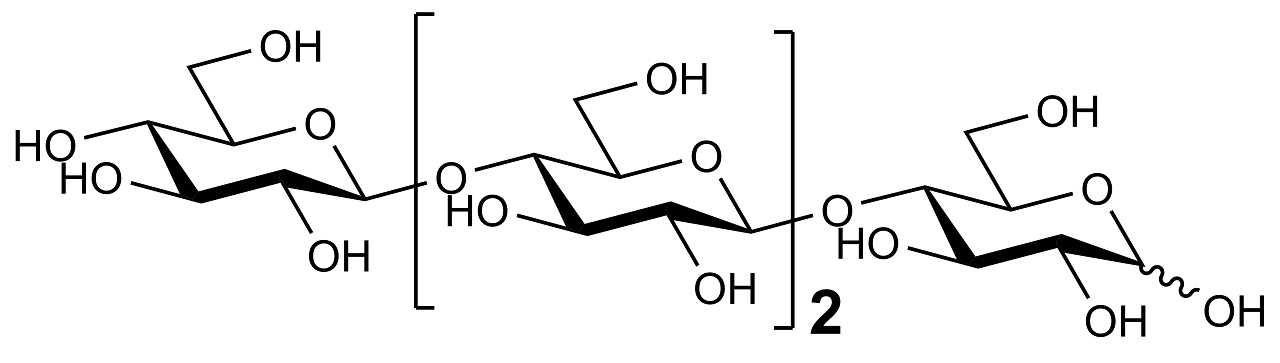
Cellotetraose
700004948 / O-CTE-50MG50 mg
Cellotetraose
Discontinued / O-CTE-100MG100 mg