Aspartame Assay Kit
50 assays (manual) / 500 assays (microplate) / 500 assays (auto-analyser)
This product has been discontinued
Long term stability: See individual component labels
Advantages
- Very cost effective
- All reagents stable for > 12 months after preparation
- Only enzymatic kit available
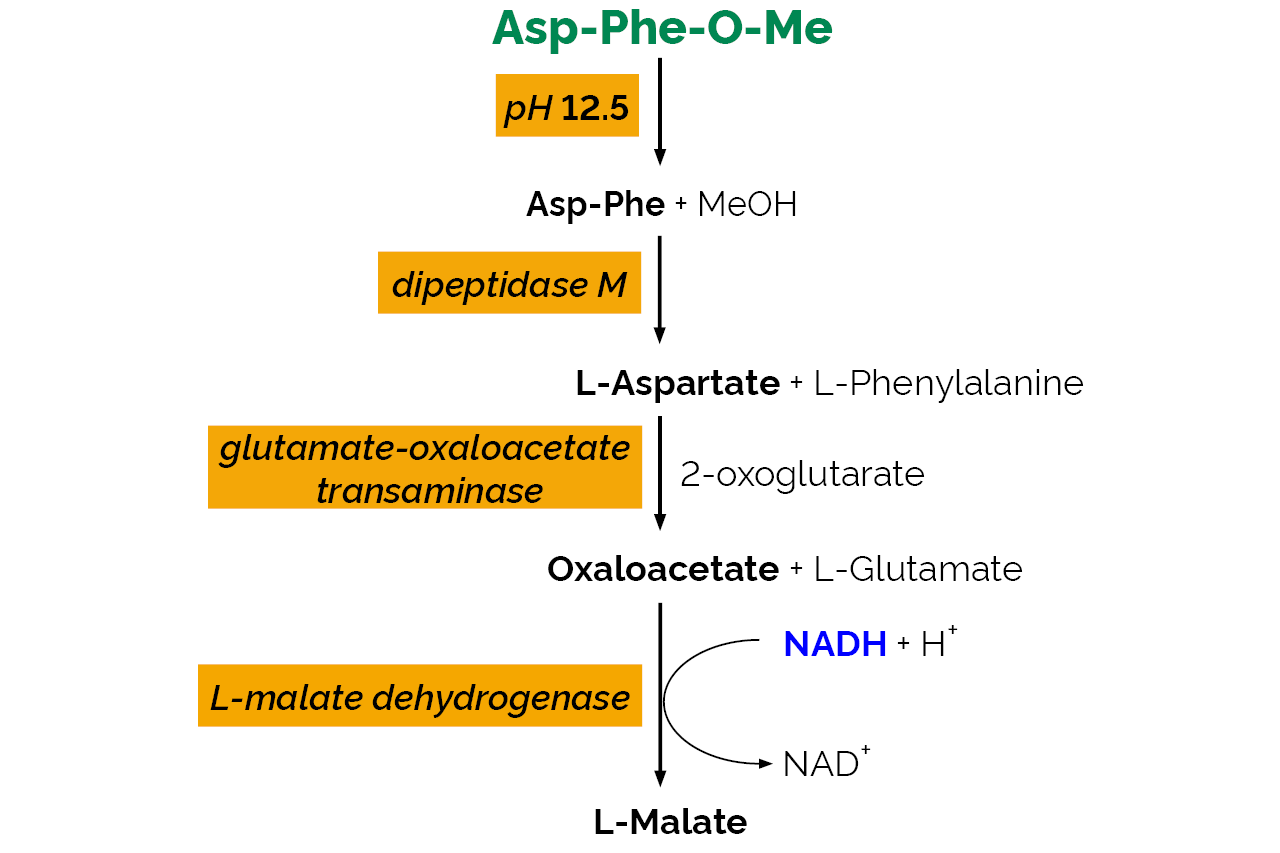
- Measures aspartame and breakdown products (L-aspartate and aspartame acid)
- Very specific
- Very rapid reaction
- Mega-Calc™ software tool is available from our website for hassle-free raw data processing
- Standard included
- Suitable for manual, microplate and auto-analyser formats
This product has been discontinued (read more).
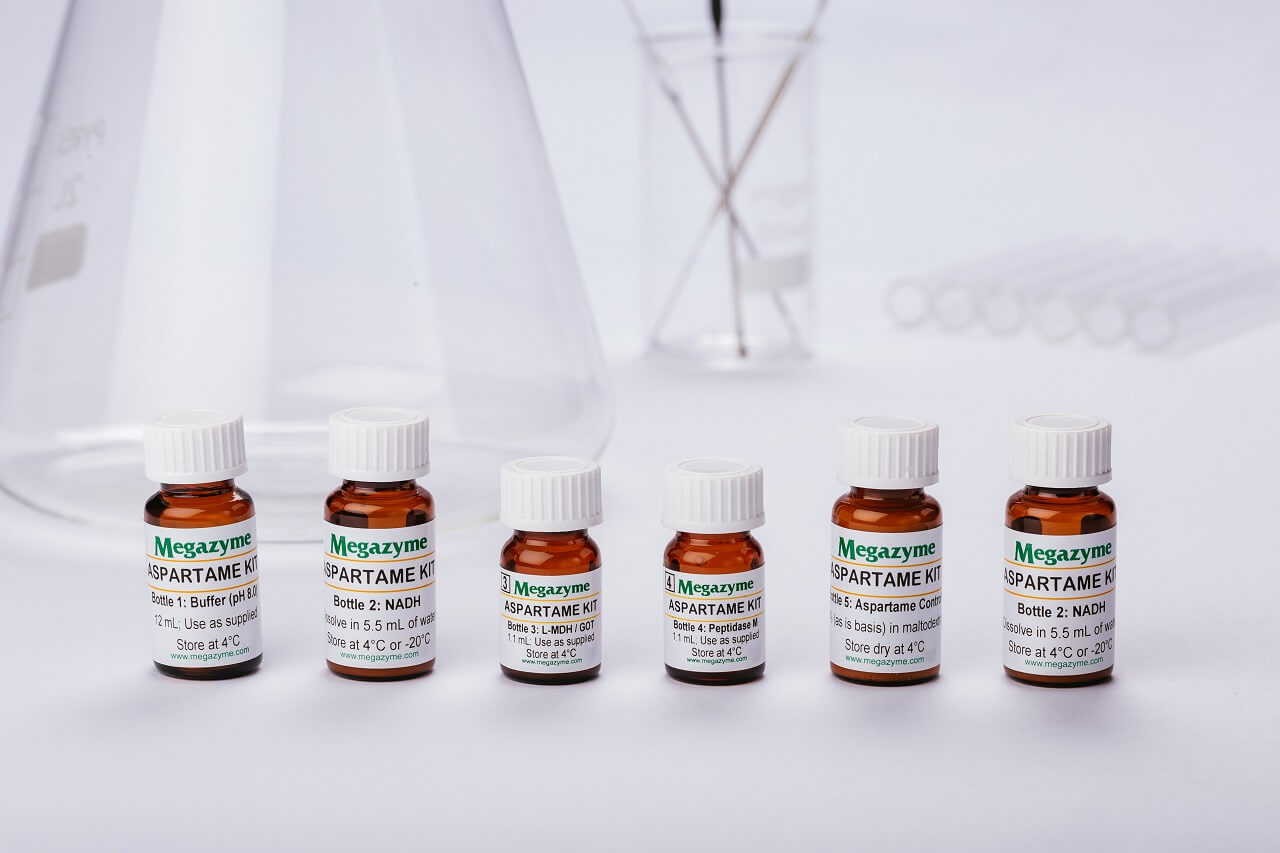
The Aspartame test kit is a simple and reliable method for the specific measurement and analysis of Aspartame in beverages and foodstuffs.
Note for Content: The number of manual tests per kit can be doubled if all volumes are halved. This can be readily accommodated using the MegaQuantTM Wave Spectrophotometer (D-MQWAVE).
We have a wide range of other assay kit products.
Publications

Wang, Z. W., Chen, Y. & Chao, Y. P. (2006). Journal of Biotechnology, 124 (2), 403-411.
Wang, Z. W., Chen, Y. & Chao, Y. P. (2006). Journal of Biotechnology, 124 (2), 403-411.
As commonly recognized, the excretion of acetate by the aerobic growth of Escherichia coli on glucose is a manifestation of imbalanced flux between glycolysis and the tricarboxylic acid (TCA) cycle. Accordingly, this may restrict the production of recombinant proteins in E. coli, due to the limited amounts of precursor metabolites produced in TCA cycle. To approach this issue, an extra supply of intermediate metabolites in TCA cycle was made by conversion of aspartate to fumarate, a reaction mediated by the activity of L-aspartate ammonia-lyase (aspartase). As a result, in the glucose minimal medium containing aspartate, the production of two recombinant proteins, β-galactosidase and green fluorescent protein, in the aspartase-producing strain was substantially increased by 5-fold in association with 30–40% more biomass production. This preliminary study illustrates the great promise of this approach used to enhance the production of these two recombinant proteins.
Safety Information
Download Safety Data Sheet
Select a specific region and the Safety Data Sheet will open in a new window. Please make sure your browser doesn’t block pop-up windows

Receive Megazyme’s latest articles, news, product introductions and promotions
Customers also viewed
100 assays (50 of each) per kit